Ages 3-10
Boxed kit with audiobook access
N/A
English
2023-10-03
9781942121947
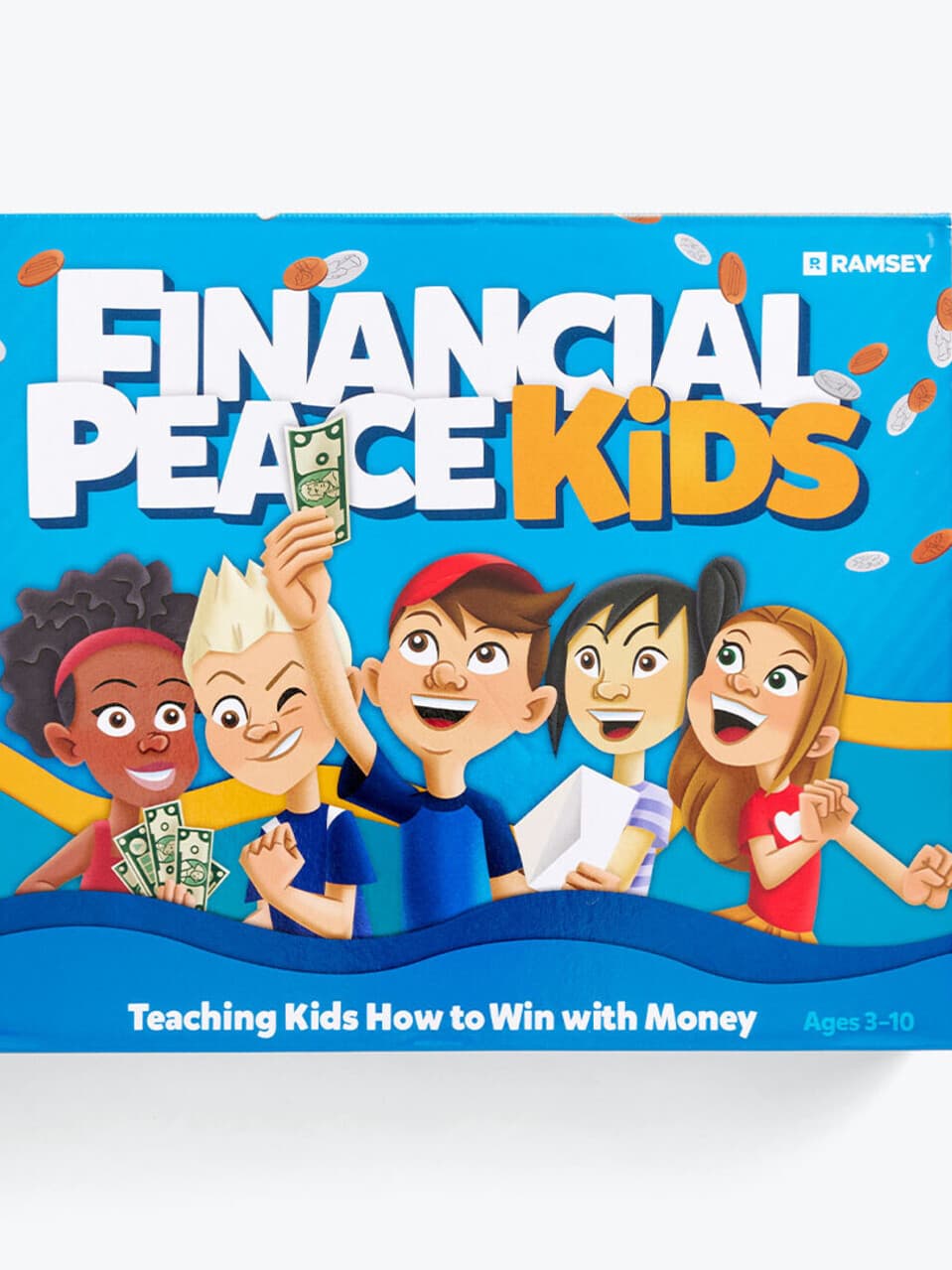
Financial Peace Kids
by Dave Ramsey
Reviewed by Alex Thompson, founder of Kids Financial Guide · Updated October 2026
As an Amazon Associate, Kids Financial Guide earns from qualifying purchases. It never affects our reviews.
Financial Peace Kids is a boxed toolkit from Ramsey Press for teaching children four money basics: working, spending, saving and giving. It includes a parent guide with short lessons (about 10 minutes each, per the publisher), an activity book with fill-in-the-blank exercises, word searches, coloring pages and mazes, a heavy-duty chore chart, a savings goal tracker with tokens, Give, Save and Spend envelopes, and access to the Smart Money Smart Kids audiobook. The publisher doesn't state an age range; we suggest it for roughly ages 3 to 10.
Ratings
Educational Value
Engagement
Clarity
Practical Application
Value For Money
What Kids Will Learn
- 1Understanding the value of work and earning money
- 2Learning basic budgeting by splitting money into give, save and spend
- 3Setting a savings goal and tracking progress toward it
- 4Making giving a regular habit
- 5Connecting money choices with daily life
Parental Guidance
Tips for using this book:
- Read the book together and discuss the financial concepts presented
- Use the book as a starting point for conversations about money management
- Try out some of the activities and exercises with your child
- Connect the book's lessons to real-world experiences in your family
Full Review
Financial Peace Kids is a practical way to bring money lessons into family life. Dave Ramsey's kit centers on four ideas, working, spending, saving and giving, and backs them up with physical tools: a chore chart, a savings goal tracker with tokens, and Give, Save and Spend envelopes. A parent guide with short lessons and an activity book for the child tie it together.
Its biggest strength is that kids take part. It's not just a book; children earn, sort and count real money, which is how young kids learn best. Parents get a ready-made structure, which helps families who want a plan but don't know where to start.
However, the kit needs ongoing parental involvement. That can be a good weekly routine, but it is not a tool kids can use on their own. It is also built around cash, so it won't prepare kids for cards and apps without extra conversations from you. At $49.99 it is a bigger purchase than a picture book.
Overall, if you want a hands-on routine for teaching young children about money, Financial Peace Kids is a solid choice. It doesn't cover every part of modern money, but it lays a good foundation of earning, saving and giving.
Our Verdict
Our take: Financial Peace Kids works because it turns money lessons into a weekly habit with real tools, not just a story. The envelopes and chore chart make earning, saving and giving concrete for young children. Plan to add your own talks about cards and digital money as your child gets older.
Supplemental Materials
- 1Parent Guide
- 2Activity Book
- 3Chore Chart
- 4Savings Goal Tracker and Tokens
- 5Give, Save and Spend Envelopes
- 6Smart Money Smart Kids Audiobook Access
Financial Peace Kids: our in-depth review
What the kit teaches
Financial Peace Kids is less a single book than a small system for running money lessons at home. It is built around four ideas: work to earn money, spend wisely, save some of it and give some away. The activity book reinforces each idea with fill-in-the-blank exercises, word searches, coloring pages and mazes, and the box includes physical tools children can actually use.
The envelopes and the chore chart are at the center. Give, Save and Spend envelopes give children a place to divide their money, which turns budgeting into something they can see and touch. The chore chart connects earning to effort, so money becomes the result of work rather than something that simply appears. A savings goal tracker with tokens shows progress toward something they want.
A parent guide ties it together, with lessons the publisher says take about 10 minutes to teach. The kit also includes access to the Smart Money Smart Kids audiobook for parents. It works best when it becomes part of the family routine rather than a one-time activity.
Using it together
Start with one short lesson from the parent guide and one page of the activity book, then introduce one tool at a time. Trying to set up the chore chart, envelopes and goal tracker all in one afternoon can overwhelm a young child. Give each piece a week before adding the next.
Questions that help the lessons land: What job did you do this week to earn money? Why do we put some money in the give envelope? What would you like to save for? Who could we help with money from your give envelope? What happens if all the money goes in the spend envelope?
Pick a regular time, such as a Saturday morning, for a short money meeting where your child gets paid for completed chores and divides the money into envelopes. Consistency matters more than the amount, and this kit depends on a parent who will show up for those meetings.
Activities to try at home
Customize the chore chart with jobs that fit your home and your child's age, like feeding a pet, setting the table or matching socks. Agree on what each job earns ahead of time, and have your child mark off the work themselves so they own the process.
Put a picture of a savings goal next to the goal tracker or on the save envelope. When the savings get close to the goal, take your child to make the purchase and let them hand over the money. That moment of paying with money they earned is often where the lesson really sticks.
Make giving concrete. Let your child choose where the giving envelope goes, whether that is a food drive, an animal shelter or a gift for a friend. Talk about how it feels to give, and celebrate it as much as a purchase. As your child grows, you can also talk about how the same spend, save and give habits apply when money lives in a bank account or on a card.
Who it's best for
The publisher doesn't give an age range. We suggest it for children roughly three to ten. Preschoolers will enjoy sorting coins into envelopes and the coloring pages, while older elementary kids can take on more responsibility for planning their own goals.
It is ideal for families who want a ready-made structure and are willing to stick with it week after week. Busy households looking for something kids can use on their own may find it demanding. It is also built around cash, so plan to add your own conversations about digital money as your child gets older.
If you have more than one child, they can share the parent guide, but each child will want their own envelopes and chart, so you may need a second set. Siblings often motivate each other, and the give envelope offers a chance for them to pool money toward a cause they choose together. Families who value generosity as much as saving will find that balance built right into the design.
Featured in our guides
Related Resources