Ages 7-9
Hardcover
96
English
2022-12-20
9780744034974
Get To Know: Money
by Kalpana Fitzpatrick
Reviewed by Alex Thompson, founder of Kids Financial Guide · Updated November 2026
The short answer
Get To Know: Money is our pick of picture-led guides for 7- to 9-year-olds who ask how banks, taxes and online money work, in 96 colorful pages for $16.99. It is a quick tour rather than a deep course and it was first published in the UK, so add US details and a talk about investing risk yourself.
| Ages | 7-9 (publisher; the description says 7+) |
|---|---|
| Price | $16.99 hardcover (list price), or free from your library |
| Length | 96 pages, illustrated nonfiction with quizzes and activities |
| Edition | DK US hardcover, December 2022 (UK edition November 2022) |
| Covers | Saving, keeping money safe, banks, taxes, the stock market, online safety, in-game purchases, money wellbeing |
| Author | Kalpana Fitzpatrick, UK personal finance journalist and digital editor-in-chief of MoneyWeek |
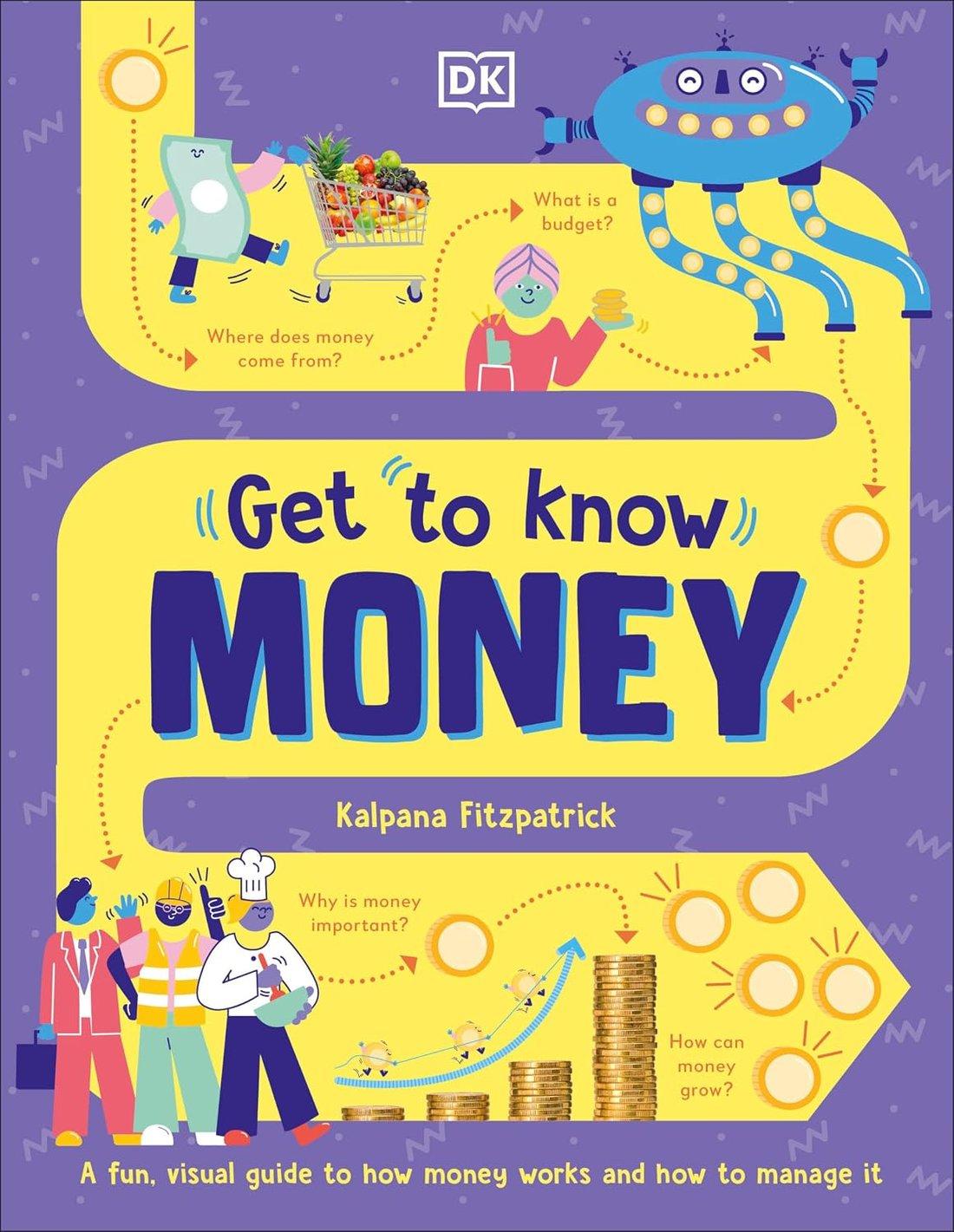
Get To Know: Money is an illustrated nonfiction guide for ages 7 to 9 (DK says 7+) by Kalpana Fitzpatrick, a UK personal finance journalist and digital editor-in-chief of MoneyWeek. The 96-page US hardcover (DK, December 2022) explains what money is and how it works: saving it, keeping it safe and growing it, what banks do with your savings, how taxes are spent, the stock market, and newer topics such as online safety, in-game purchases and money wellbeing, with diagrams, quizzes and activities.
Ratings
Educational Value
Engagement
Clarity
Practical Application
Value For Money
What Kids Will Learn
- 1What money is and how saving, keeping it safe and growing it differ
- 2What a bank does with the money you put in
- 3Why people pay taxes and what taxes pay for
- 4That money can be spent online and in games, and how to stay safe doing it
Parental Guidance
Tips for using this book:
- Read the book together and discuss the financial concepts presented
- Use the book as a starting point for conversations about money management
- Try out some of the activities and exercises with your child
- Connect the book's lessons to real-world experiences in your family
Full Review
Most money books for 7- to 9-year-olds stay with coins, piggy banks and a lemonade stand. Get To Know: Money goes wider. In DK's familiar picture-led style, with colorful diagrams, quizzes and activities, it explains what money is, how to save it, keep it safe and grow it, what banks do with your savings, how taxes are spent, and how money moves around the world. It also covers the money kids now meet on screens first: online safety, microtransactions (small in-game and in-app purchases) and money wellbeing. The author, Kalpana Fitzpatrick, is a UK personal finance journalist and editor. Two things to know as a parent. It is a tour, not a course: each topic gets a spread or two, so it opens questions more than it answers them. And it was first published in the UK, so some words, such as pocket money, and examples will need a quick translation for an American child. For a curious 7- to 9-year-old who keeps asking what banks do or why there are taxes, it is our pick for a picture-led starting point.
Our Verdict
Our take: this is our pick for the 7- to 9-year-old who is past saving stories and wants to know how money really works. Read a spread at a time and connect it to something real: a bank statement, a receipt that shows sales tax, or an in-app purchase screen. Whatever the book says about the stock market, make sure your child hears that stocks can lose value as well as gain it.
Get To Know: Money: our in-depth review
What the book teaches
The book starts with the basics: what money is, why it matters, and three things you can do with it, save it, keep it safe and grow it. It then widens out to how the money system works: what banks do with the savings you put in, how taxes are collected and spent on things like schools and roads, and how money is made and moved around the world. It also introduces the stock market.
The last strand is the money kids meet today: microtransactions (small purchases inside games and apps), staying safe online, and how money can affect how we feel. DK presents the topics in short sections with colorful diagrams, quizzes and activities, so it is easy to read in small pieces.
A quick tour from the UK
Two caveats. The first is depth: 96 pages over this many topics means one or two spreads each. That is right for ages 7 to 9, but it means the book raises questions you will need to answer, especially about the stock market, which the publisher pitches to kids who dream of making millions. Stocks can go down as well as up, and investments are not protected the way money in a savings account at an FDIC-insured bank is (the US government insures bank deposits up to $250,000 per depositor, per insured bank, for each ownership category, if the bank fails).
The second is where it comes from. The author is a UK money journalist and the book first came out in the UK. Expect some British words, such as pocket money for allowance, and be ready to add how things work in the US, like sales tax added at the register (if your state or town has one).
If talk of online money leads your child to ask about bitcoin or other crypto, keep it simple: it is a kind of digital money whose price can swing wildly or crash, kids can't buy it on their own (exchanges require adults, and any kids' app that offers it runs through an account a parent controls), and anyone online who promises to grow their money fast or asks them to send money, gift cards or crypto is running a scam.
Reading it together
Read one spread at a time and connect it to something your child can see. After the banks pages, look at a sample bank statement together, or your own banking app if you're comfortable sharing it. After the taxes pages, find the sales tax line on a store receipt. After the online pages, open a game's in-app store together, with purchases set to need your password, and talk about what a pack of gems really costs in dollars.
Questions to talk about: Why might someone keep money in a bank instead of a jar? What do taxes pay for that we use every week? Why do games sell things for coins or gems instead of dollars? What would you do if someone in a game asked for your password or your parent's card?
For a hands-on start tonight, find one receipt and work out together how much was the price and how much was tax (if your state or town has sales tax). With a 7-year-old, just find the tax line and read the number together. Then ask your child what they think the tax money might pay for.
Who it's best for
DK lists it for ages 7 to 9. It suits a curious child who likes facts, pictures and quizzes more than stories, and who is starting to ask how banks, taxes or online money work. Seven- and eight-year-olds will get most from it with a parent alongside; many 9- and 10-year-olds can read it alone.
If your child is younger or prefers stories, start with a picture book about saving and come back to this one later. If they finish it wanting more, an 8- to 12-year-old nonfiction book such as Finance 101 for Kids or Investing for Kids goes deeper. Many public libraries carry Get To Know: Money; the US hardcover (ISBN 9780744034974) is the edition to look for.
Frequently asked questions
What age is Get To Know: Money for?
DK lists it for ages 7 to 9 and describes it as a book for children aged 7 and up. Its short sections and pictures suit 7- and 8-year-olds reading with a parent, and many 9- and 10-year-olds can read it on their own.
Does Get To Know: Money explain banks and digital money?
Yes. The publisher says it explains what banks do with your savings and covers online safety and microtransactions, the small in-game and in-app purchases kids meet first. It is a good way into a talk about cards, apps and why money on a screen is still real money.
Is Get To Know: Money written for American kids?
It is a DK US edition, but the author is a UK money journalist and the book was first published in the UK. Expect some British words such as pocket money, and add US details like how taxes and bank accounts work here.
Does Get To Know: Money teach kids about investing?
It introduces the stock market as one way money can grow; the publisher pitches it to kids who dream of making millions there. Whatever the book says, make sure your child hears that stocks can lose value as well as gain it, and kids can only invest through an account a parent opens and oversees.
Related Resources