Ages 5-8
Paperback (hardcover also available)
N/A
English
2018-09-04
9781536202953
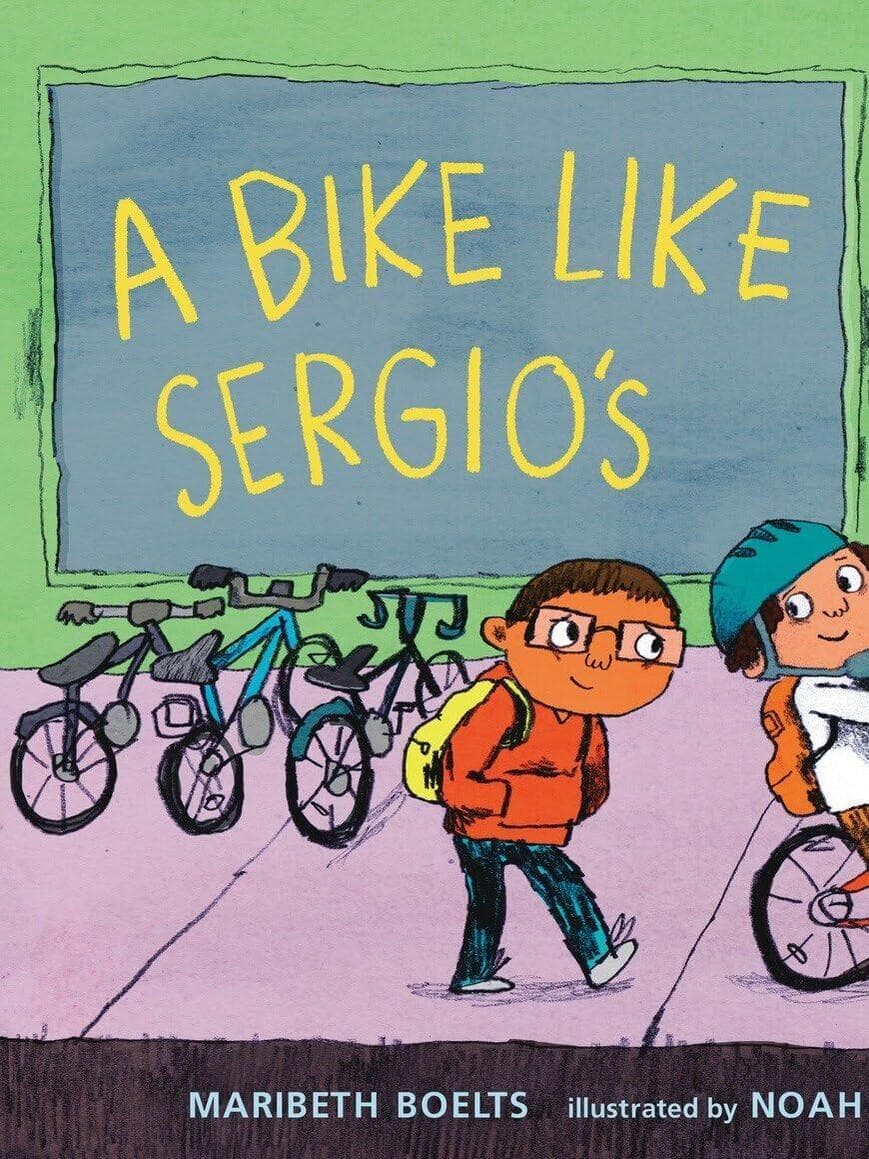
A Bike Like Sergio's
by Maribeth Boelts
Reviewed by Alex Thompson, founder of Kids Financial Guide · Updated October 2026
In A Bike Like Sergio's, written by Maribeth Boelts and illustrated by Noah Z. Jones, Ruben dreams of owning a bike like his friend Sergio's, but his family can't afford one. When a woman at the grocery store drops what he thinks is a dollar, Ruben picks it up and discovers it is a $100 bill, more than enough for the bike. He has to decide whether to spend it on what he wants or give it back. Through Ruben's choice, the book opens up talk about needs versus wants, opportunity cost, impulse control and honesty with money. First published in hardcover in 2016; this listing is the 2018 Candlewick paperback.
Ratings
Educational Value
Engagement
Clarity
Practical Application
Value For Money
What Kids Will Learn
- 1Understanding the difference between needs and wants
- 2Recognizing the consequences of financial choices
- 3Practicing ethical decision-making with money
- 4Practicing pausing to think before spending
Parental Guidance
Tips for using this book:
- Read the book together and discuss the financial concepts presented
- Use the book as a starting point for conversations about money management
- Try out some of the activities and exercises with your child
- Connect the book's lessons to real-world experiences in your family
Full Review
This beautifully illustrated and emotionally compelling book introduces kids to the financial concepts of needs vs. wants, impulse spending, and opportunity cost through a scenario that feels both real and high-stakes. Ruben's inner conflict mirrors the struggles many children face when handling money, making it an excellent conversation starter for parents and educators.
A standout moment in the book is when Ruben contemplates buying the bike versus returning the money. His struggle makes the lesson personal rather than preachy, and it opens the door for kids to reflect on their own financial decisions. Candlewick offers a free teachers' guide with discussion questions and writing activities, and Reading Is Fundamental has a free educator guide too.
However, younger readers (5-6) may need additional guidance to fully grasp the moral implications. Some children might even take away the opposite lesson—thinking that keeping found money is justified. That said, this complexity also makes it a great book for discussion. Overall, A Bike Like Sergio's is a strong pick for early money conversations, blending a gripping story with lessons about honesty and choices.
Our Verdict
Our take: this is one of the best picture books for starting a conversation about wanting something you can't afford, and about whether found money is really yours. It teaches through Ruben's feelings rather than a lecture, which makes the lesson stick. Younger children will need an adult to talk the ending through, so plan to read it together.
Supplemental Materials
- 1Candlewick Press teachers' guide (free PDF with discussion questions and activities)
- 2Reading Is Fundamental guide for educators (free printable)
A Bike Like Sergio's: our in-depth review
What the story teaches
At its heart, A Bike Like Sergio's is about the gap between wanting something badly and being able to afford it. Ruben watches his friend Sergio ride a bike he can only dream about, while his family has to make every dollar stretch. When a woman at the grocery store drops a $100 bill, the wanting and the not having collide in a way young children instantly understand.
The money ideas sit inside that tension rather than being explained outright. Children see that a single choice closes off other choices, which is the simplest way to meet opportunity cost. They feel the pull of spending right now versus thinking it through, and they notice that a family's needs come before one child's wants. The book also raises a question many money books skip entirely: whether money is truly yours just because it ended up in your hands.
Because the story treats Ruben's dilemma seriously, it never feels like a lecture. The moment he realizes the bill is $100 and the moment Ruben thinks the money might be gone are the parts children tend to remember, and both are worth pausing on.
Reading it together
Read it straight through the first time so your child can feel the suspense, then go back for a slower second read. Stop at the moments where Ruben has to decide something and ask your child what they would do before turning the page. There are no wrong answers at this stage. The goal is to hear their reasoning.
Questions that work well: What does Ruben's family need at the store, and what does Ruben want? How do you think Ruben feels carrying the money around all day? Who might have lost it, and what might that person be going through? If Ruben spends it on the bike, what else could the money have done? What is the difference between earning money, being given money, and finding money?
Some children, especially the younger ones, may decide that keeping found money is fine. Rather than correcting them right away, ask them to imagine they were the person who lost it. That shift in perspective usually does more than any explanation.
Activities to try at home
Make a needs and wants sort. Write or draw a dozen everyday items on slips of paper, such as milk, a toy car, shoes, a movie ticket, bread and a video game, and have your child sort them into two piles. Then talk about the tricky ones, like shoes that are needed versus fancy shoes that are wanted.
Play a gentle what-would-you-do game at dinner. Offer small scenarios: you find a dollar on the playground, a cashier gives you too much change, a friend leaves their snack money on the bus. Let everyone share an answer and a reason. You can also practice simple money math by counting out play bills and coins to see how many small purchases would add up to something big, like a bike.
If your child has a real want, help them draw it and pin it up next to a simple savings chart. Seeing a goal fill in slowly is a natural follow-up to Ruben's story about wanting something you cannot have yet.
Who it's best for
The publisher lists this picture book for ages five to eight, and it shines most with kids in the upper half of that range who can hold onto a moral question and talk it through. Five and six year olds will still enjoy it, but plan to do more of the guiding and expect the conversation to be simpler.
It is a strong pick for families who want to talk about honesty and money in the same breath, and for households where money is tight, since Ruben's family situation is portrayed with warmth and without embarrassment. If you are looking for practical skills like budgeting or saving systems, pair it with a more hands-on resource, because this book is about values and choices first.
Featured in our guides
Related Resources