Ages 12-18
Paperback, eBook
256
English
2022-05-10
9781250791696
How to Money
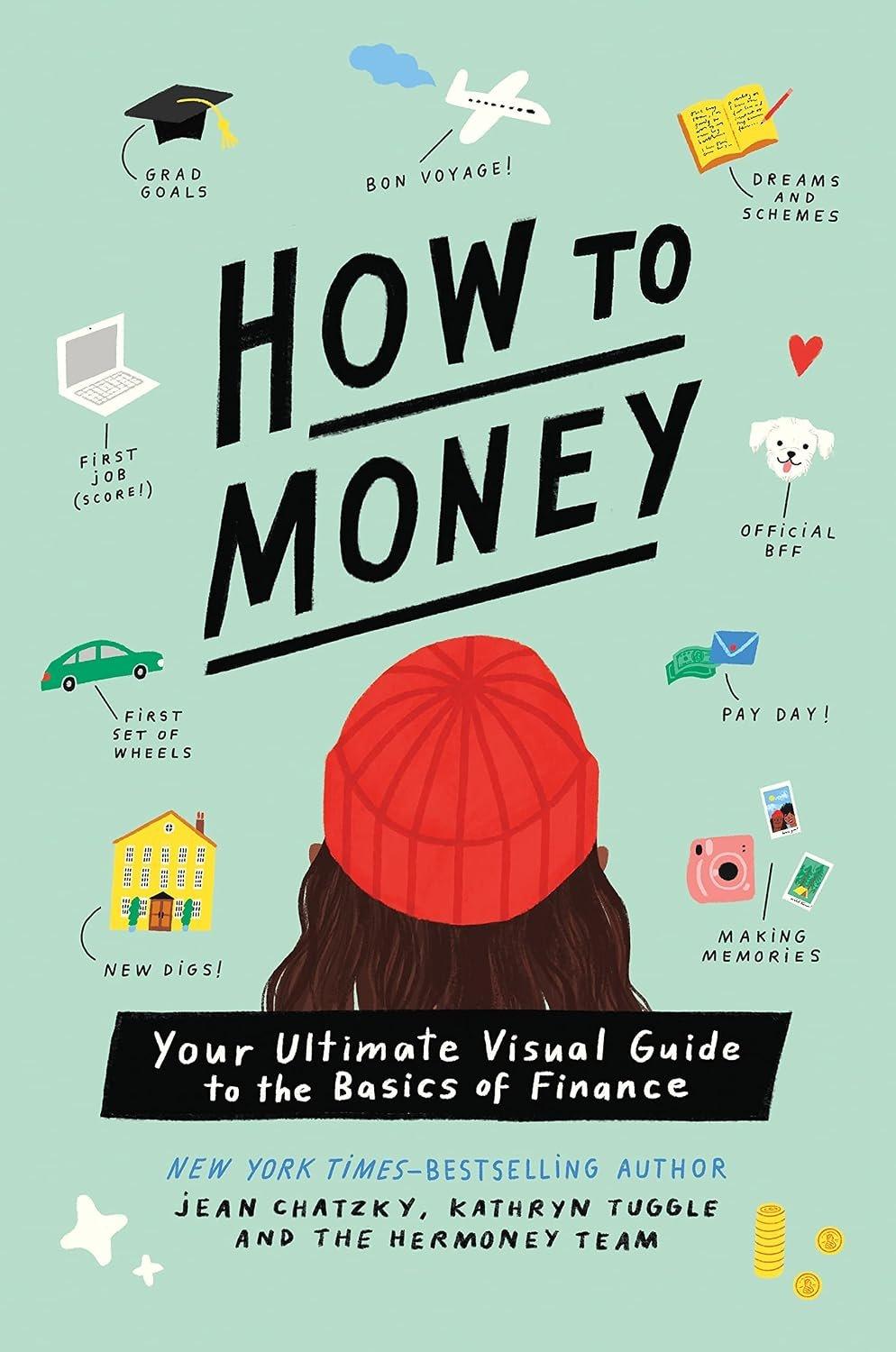
by Jean Chatzky and Kathryn Tuggle, with the HerMoney team; illustrated by Nina Cosford
Reviewed by Alex Thompson, founder of Kids Financial Guide · Updated November 2026
The short answer
How to Money is our pick for teens 12 to 18, covering budgets, first paychecks, credit cards, student loans and investing in a visual 256 pages for $19.99. It came out in 2022, so check current rates and rules with your teen, and talk through investing and crypto risk together.
| Ages | 12-18 (bookseller listings; School Library Journal says grade 7 and up) |
|---|---|
| Price | $19.99 paperback (list price), eBook about $12.99, or borrow it free from a library that carries it |
| Length | 256 pages, illustrated, with a glossary and index |
| Edition | Roaring Brook Press paperback, May 2022 |
| Covers | Budgeting, first jobs and paychecks, college loans, credit cards and credit, investing, giving and money and happiness |
| Authors | Jean Chatzky, CEO of HerMoney and former Today show personal finance reporter, and Kathryn Tuggle, HerMoney's chief content officer |
How to Money: Your Ultimate Visual Guide to the Basics of Finance is a 256-page illustrated guide for teens aged 12 to 18 by Jean Chatzky, former financial editor of NBC's Today show and CEO of HerMoney, and Kathryn Tuggle, with their HerMoney team (Roaring Brook Press, 2022). It covers making and sticking to a budget, landing a first job and reading a paycheck, college loans and avoiding student debt, a first credit card and what credit means, and investing, with interviews, a glossary and illustrations by Nina Cosford.
Ratings
Educational Value
Engagement
Clarity
Practical Application
Value For Money
What Kids Will Learn
- 1Making a budget and sticking to it
- 2What a paycheck shows and why take-home pay is less than you earn
- 3How credit cards and credit work, and how to use them safely
- 4How student loans work and ways to borrow less for college
- 5Why investing matters, and (with a parent) that it carries risk
Parental Guidance
Tips for using this book:
- Read the book together and discuss the financial concepts presented
- Use the book as a starting point for conversations about money management
- Try out some of the activities and exercises with your child
- Connect the book's lessons to real-world experiences in your family
Full Review
How to Money covers the money decisions most teens meet between 12 and 18. Jean Chatzky, a longtime personal finance journalist, and Kathryn Tuggle, with their HerMoney team, walk teens through earning, managing and using money: building a budget and sticking to it, getting a first job and understanding the paycheck, navigating college loans and avoiding student debt, getting a first credit card and learning what credit means, and investing. School Library Journal notes it also covers wants versus needs, giving, money and happiness, and current topics such as thrift stores and cryptocurrency, with interviews, sidebars, a glossary and an index. It is designed to be read in order or by topic, so a teen can jump to the chapter they need right now. Two caveats. It came out in 2022, and School Library Journal warned that details on investing and money trends date quickly, so check rates and rules together. And investing and crypto need a real conversation about risk. For a teen with a first job, a first card or college on the horizon, it is our first pick for a single guide.
Our Verdict
Our take: this is our first pick for teens 12 to 18. Hand it over when a real decision comes up, a first paycheck, a credit card offer or a college cost, and read that chapter together. Pair it with a real budget your teen manages and, if you invest, a small account you open and oversee together.
How to Money: our in-depth review
What the book teaches
The book follows the money decisions of the teen years. It starts with a budget, how to make one and stick to it, then moves to earning: landing a first job and understanding what a paycheck shows, including why take-home pay is less than what you earned. From there it covers borrowing, college loans and how to avoid heavy student debt, and a first credit card and what credit means.
It ends with investing and why it matters. Throughout, the goal is what the publisher sums up as earn more, save smart, invest wisely, borrow only when you have to, and enjoy everything you've got. School Library Journal notes sidebars, interviews, charts and sample documents, with key words highlighted and a 10-page glossary at the back.
Credit, investing and crypto: talk it through
The credit chapters are the most useful and the riskiest. Explain that a credit card is a loan: if you don't pay the full balance each month, you pay interest, often over 20% a year (the Federal Reserve's average for accounts paying interest has been above 20% in recent years).
Under 18, a teen can't open their own credit card. From 18 to 20, they need income or assets of their own to show they can pay (a few card companies still accept a co-signer, an adult who agrees to pay if the teen doesn't). Many teens start as an authorized user, a card on a parent's account: you, the cardholder, owe everything charged on it, so set a spending limit or alerts if your card company offers them, and check that your card company reports authorized users to the credit bureaus, and keep your own payments on time, because the account can show up on your teen's credit history. Paying on time, every time, and using only a small part of the credit limit builds a credit score, a number lenders use to decide whether to lend to you.
Investing comes with risk. Stocks can go down as well as up, and investments are not protected the way money in a savings account at an FDIC-insured bank is (the US government insures deposits up to $250,000 per depositor, per insured bank, for each ownership category, if the bank fails). Kids can't open a brokerage account on their own; a parent opens a custodial or teen account and oversees it (in a custodial account, the money legally belongs to the child, but the parent controls it until the child comes of age). Compounding, earning returns on past returns, is why starting young helps, but no return is guaranteed.
School Library Journal says the book touches on cryptocurrency. Crypto can swing wildly or lose most of its value. Major US crypto exchanges require users to be 18 or older, and crypto is not FDIC-insured, so a teen shouldn't be buying it on their own. Tell your teen that anyone online promising fast gains, or asking them to send money, gift cards or crypto, is running a scam, and never to share passwords, verification codes or a crypto wallet's recovery phrase. Payment apps like Venmo and Cash App send money instantly and usually can't be reversed, so only pay people you know in person, and treat any "I sent you money by mistake, send it back" message as a scam. Money held in a payment app balance may not be FDIC-insured either.
Reading it together
This is a dip-in book. Let your teen pick the chapter that matches their life now, a first job, a first card or college plans, and read it the same week. Come back to the others when the decision arrives. When your teen gets a first job, sit down together for the paperwork: they'll give their Social Security number on the W-4 tax form and show ID documents for the I-9 work-eligibility form. Share these only with a confirmed employer, never in a chat, text or reply to a job ad, and remember a real job never asks you to pay to start or to share a bank password.
Questions to talk about: What would you put in a monthly budget if you had a job? Why is your take-home pay less than your hourly wage times your hours? What does it cost to carry a $500 credit card balance for a year (at about 22% a year, roughly $110 to $120 in interest if nothing is paid off)? How much would you want to borrow for college or training after high school, and how long would it take to pay back?
For a hands-on start tonight, take one real pay stub, yours or a sample online (a sample works just as well if you'd rather keep yours private), and find the gross pay, the taxes and the take-home pay together. Then ask your teen to sketch a one-month budget using that take-home number. Point out that Social Security and Medicare (7.65% in total) come out of almost every paycheck, and that many teens owe little or no federal income tax and can get back the federal income tax that was withheld by filing a return (Social Security and Medicare are not refunded).
Who it's best for
Booksellers list it for ages 12 to 18. It fits best from about 14, when a first job, a first bank card or college costs are close, and younger teens who like nonfiction can start with the budgeting chapters. It is a good gift for a teen starting a first job or planning what comes after high school.
For a 10- to 14-year-old who isn't ready for credit and loans, How to Turn $100 into $1,000,000 is a lighter first step on earning and investing. Many public libraries carry How to Money; the 2022 Roaring Brook paperback (ISBN 9781250791696) is the edition to look for.
Frequently asked questions
What age is How to Money for?
Booksellers list it for ages 12 to 18, and School Library Journal recommends it for grade 7 and up. Younger teens will get most from the budgeting and first-job chapters; the student loan and credit card chapters matter most from about 15 or 16, when those decisions get close.
Is How to Money a good book for teens learning about credit cards?
Yes. It explains how to get a first credit card and what credit means. Add today's rules: under 18, a teen can't open their own card; from 18 to 20 they need income or assets of their own or, at the few card companies that allow it, a co-signer. Many teens start as an authorized user on a parent's card, and the parent owes that bill. Paying the full balance every month avoids interest.
Does How to Money cover investing and crypto?
It covers investing and why it matters, and School Library Journal notes it touches on cryptocurrency. Talk it through together: stocks can lose value, crypto can swing wildly or crash, major US crypto exchanges require users to be 18 or older, and crypto is not FDIC-insured. Anyone online who promises fast gains or asks for money, gift cards or crypto is running a scam.
Is How to Money out of date?
It came out in May 2022. The core lessons on budgeting, credit and saving hold up, but School Library Journal warned that details on investing and money trends change fast, so check current interest rates and app features with your teen. Federal student loan repayment plans and borrowing limits changed in 2025 and 2026, so check studentaid.gov for the rules that apply now.
Related Resources