Ages 5-9
Paperback, Hardcover, eBook
N/A
English
2019-01-08
9781534429024
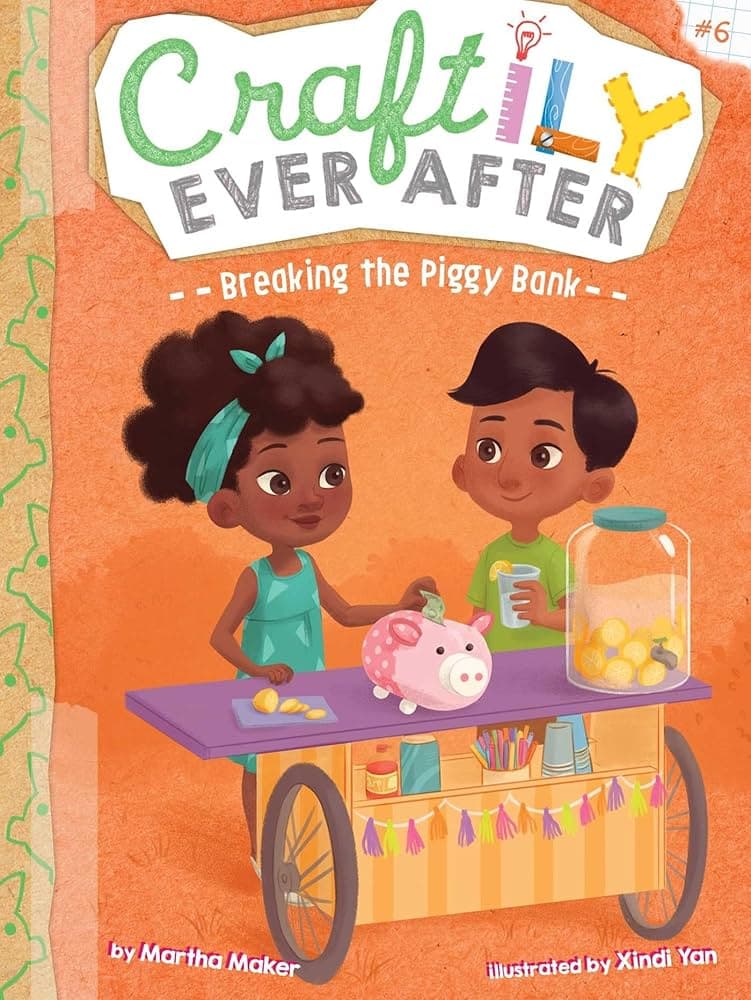
Breaking the Piggy Bank
by Martha Maker
Reviewed by Alex Thompson, founder of Kids Financial Guide · Updated October 2026
In Breaking the Piggy Bank, the sixth Craftily Ever After book by Martha Maker (illustrated by Xindi Yan), four friends who love making things are running low on craft supplies, so they pool the last of their allowance to open a lemonade stand. The stand looks great, but the lemonade is not, and the customers do not come. The friends have to work out how to save their business. It is an early chapter book with illustrations on almost every page, which the publisher pitches at ages 5 to 9 (grades K-4), and its money lessons come through the story rather than through instruction.
Ratings
Educational Value
Engagement
Clarity
Practical Application
Value For Money
What Kids Will Learn
- 1Understanding that a business has costs before it earns anything
- 2Seeing that customers only buy when the product is good
- 3Pooling money toward a shared goal
- 4Working as a team and making decisions together
- 5Bouncing back when a plan does not work out
Parental Guidance
Tips for using this book:
- Read the book together and discuss the financial concepts presented
- Use the book as a starting point for conversations about money management
- Try out some of the activities and exercises with your child
- Connect the book's lessons to real-world experiences in your family
Full Review
Breaking the Piggy Bank is the sixth book in Martha Maker's Craftily Ever After series, an early chapter book series about four friends who love to make things. Their craft supplies are running low, so they put the last of their allowance into a lemonade stand, and the story follows what happens when a fun idea turns into a real little business.
The money lessons sit inside the plot. The friends spend money before they sell a single cup, and they find out that a stand that looks fabulous is not enough if the lemonade is not good and the customers stay away. They have to work together to fix it, which adds a teamwork angle that many money books skip.
This is not a how-to guide and it does not try to cover budgeting systems or investing. Its strength is that it makes earning feel concrete and exciting for young readers, especially kids who like crafts more than numbers. Paired with a real lemonade stand or bake sale at home, where your child works out what was spent, what came in and what was left, it becomes a practical first lesson in how businesses work.
Our Verdict
Our take: for readers from kindergarten to about fourth grade, this is one of the friendlier ways into the idea of earning money. It will not teach budgeting on its own, but it opens a good conversation: what did it cost, what did we make, and what did we keep? Run a real stand afterward and the lesson sticks.
Breaking the Piggy Bank: our in-depth review
What the book teaches
Breaking the Piggy Bank follows four friends who need money for craft supplies and decide to earn it together with a lemonade stand. Through their venture, readers watch real money ideas play out: spending to get started, making something people actually want to buy, and finding customers.
The friends fund the stand with the last of their allowance, so the book also touches on putting money toward a goal and taking a chance with it. The lessons come through the characters' choices rather than through instruction, which helps the ideas feel natural instead of like homework.
To make the profit idea concrete, add the simple subtraction yourself (what we spent, what we collected, what we kept) when you talk about the story or try the activities below.
Reading it together
At 128 pages with illustrations on almost every page, it can be read in one sitting by a confident reader or spread over a few evenings. If your child is reading on their own, ask them to tell you what happened with the business at the end of each chapter. Retelling is a quiet way to check understanding.
Questions to try: What did the kids need to buy before they could start selling? Why didn't customers come? After they paid for supplies, how much do you think they really earned? What would you do differently if you ran the stand?
Kids who already know the basics may find the story simple. If that is your child, lean into it and ask them to spot what the characters get wrong. Playing money critic is a great way to deepen their thinking.
Activities to try at home
Run your own stand. Choose a product, like lemonade or homemade bookmarks, and have your child make a simple sheet with three lines: what we spent, what we collected and what we kept. Doing the subtraction themselves makes profit click in a way no explanation can.
Make the craft. Decorate a jar or box as a savings bank with a goal written or drawn on the front. Add a strip of paper on the side that your child colors in as the savings grow. Pair it with a one-week spending tracker where they jot down or draw each purchase.
Hold a family budget meeting. Give your child a pretend amount for a weekend outing and let them plan how to split it between snacks, an activity and something to save. Talk afterward about what they would change next time.
Who it's best for
This book suits children who are ready for an early chapter book and like making things. The publisher pitches it at ages 5 to 9. It is a good pick for kids who are already curious about earning their own money and want to try a small business idea.
Children who already understand the basics may find parts of it simple, and it does not go into digital money or online payments, so add those conversations yourself. It works best when a parent joins in on a real project afterward, since that is where much of the learning happens.
It also makes a good bridge for kids moving from picture books to chapter books. The business plot gives a reluctant reader a reason to keep going. If your child likes crafts more than numbers, this may be the book that finally gets them interested in money.
Featured in our guides
Related Resources