Ages 8-12
Paperback, eBook
108
English
2016-04-12
9781634139434
Finance 101 for Kids
by Walter Andal
Reviewed by Alex Thompson, founder of Kids Financial Guide · Updated November 2026
The short answer
Finance 101 for Kids is a solid, wide-ranging first money book for ages 8 to 12 that covers earning, saving, credit, the stock market and giving in 108 pages for $12.95. It is self-published and dates from 2016, so expect a plain primer rather than a polished trade book, and add cards, apps and investing risk yourself.
| Ages | 8-12, grades 3-7 (distributor listing; some retailers say 9-12) |
|---|---|
| Price | $12.95 paperback (list price); also an eBook, with prices that vary by store |
| Length | 108 pages, nonfiction |
| Edition | Paperback, ISBN 9781634139434, dated April 2016 (self-published, now listed under Gatekeeper Press) |
| Covers | History of money, earning, saving and investing, credit, the stock market, currencies and foreign exchange, giving back |
| Author and illustrator | Walter Andal, a father of four with an MBA in international finance and a career in banking, insurance, real estate and healthcare; illustrated by Richard Peter David |
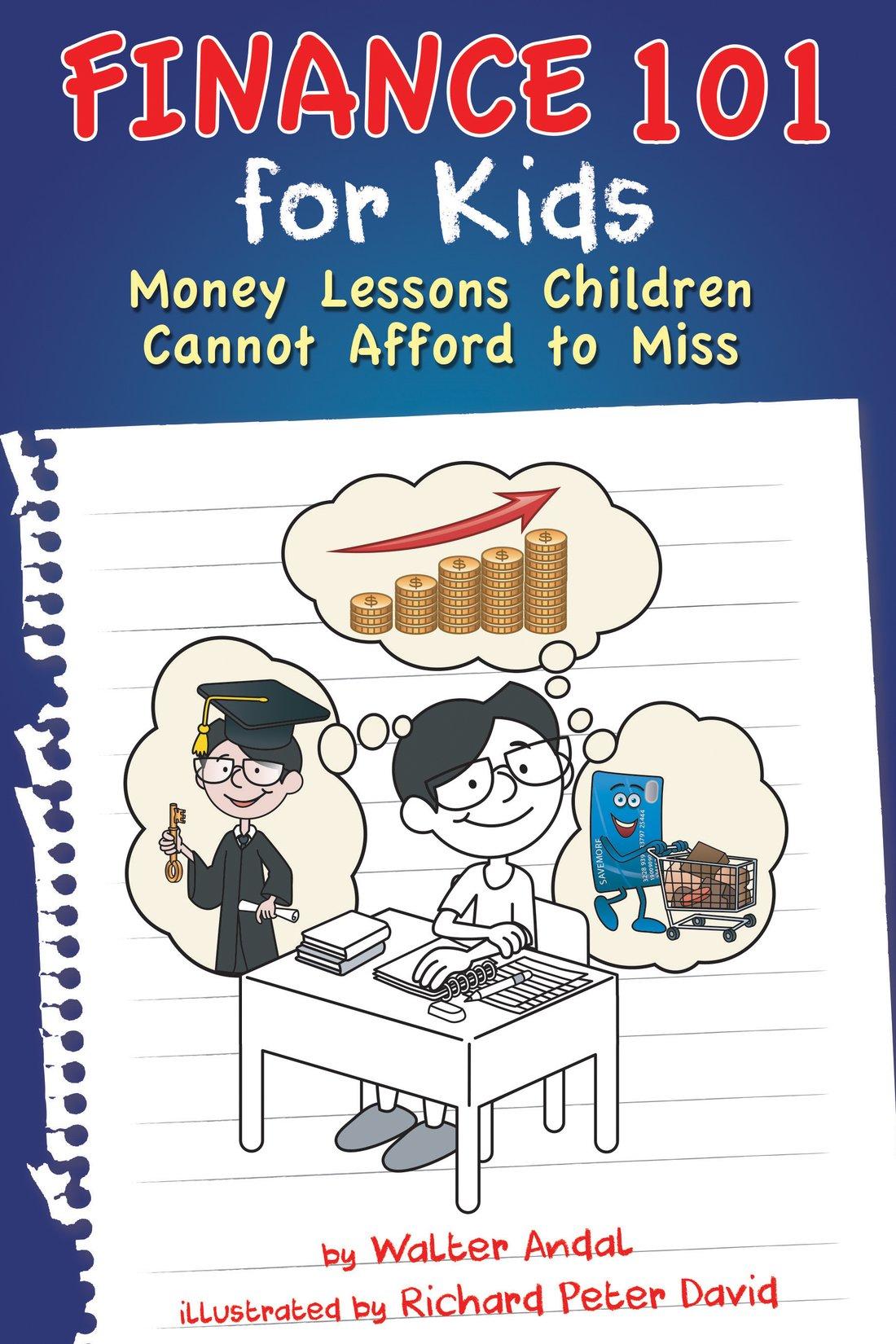
Finance 101 for Kids: Money Lessons Children Cannot Afford to Miss is a short nonfiction money primer for ages 8 to 12 by Walter Andal, illustrated by Richard Peter David. Andal is a father of four with an MBA in international finance who has worked in banking, insurance, real estate and healthcare. Self-published in 2016 and now distributed through Gatekeeper Press, a self-publishing service, it covers the history of money, earning, saving and investing, credit and the risks of misusing it, the stock market, currencies and foreign exchange, and giving back to the community.
Ratings
Educational Value
Engagement
Clarity
Practical Application
Value For Money
What Kids Will Learn
- 1Where money came from and why we use it
- 2Ways kids can earn money
- 3Why saving matters, and a first look at investing
- 4What credit is and the risks of misusing it
- 5Why giving back to the community matters
Parental Guidance
Tips for using this book:
- Read the book together and discuss the financial concepts presented
- Use the book as a starting point for conversations about money management
- Try out some of the activities and exercises with your child
- Connect the book's lessons to real-world experiences in your family
Full Review
Finance 101 for Kids takes a different approach from most money books for this age: instead of a story, it is a short nonfiction primer. Walter Andal, a father of four with a finance background, wrote it after finding that personal finance wasn't taught in his sons' elementary school. In 108 pages it covers where money came from, earning, saving and investing, credit and the risks of misusing it, the stock market, economic forces that affect personal finance, currencies and foreign exchange, and giving back to the community. That breadth is its strength: it covers credit and foreign exchange, which most books for this age leave out. It is also its limit, since each topic gets a brief introduction, and as a book self-published in 2016 it doesn't have the polish of a trade publisher's title or anything on today's cards and apps. For a curious 9- to 11-year-old who likes facts more than stories, it is a useful overview to read a chapter at a time with a parent.
Our Verdict
Our take: a good starter primer for a fact-loving 9- to 11-year-old, best read a chapter at a time with you. Use the credit chapter to talk about interest and paying things back, and when it reaches the stock market, add that stocks can lose value and that any real investing happens in an account you control.
Finance 101 for Kids: our in-depth review
What the book teaches
Finance 101 for Kids starts at the beginning, with how money came about and why people use it, then moves to how kids can earn money and why saving matters. From there it introduces investing and the stock market, credit and the risks of misusing it, the economic forces that affect personal finance, and currencies and foreign exchange (how one country's money is swapped for another's). It ends with giving back to the community.
Walter Andal wrote it for his own sons, who were 9 and 10 when he started, after finding few books that tied money ideas to real life. It is nonfiction rather than a story, so it suits kids who like facts and explanations.
What to add as a parent
The book is self-published and came out in 2016, so treat it as a starting point and fill in a few things yourself. Most kids today see money as taps and screens, not coins and bills, so talk about debit cards, gift cards and payment apps, how to keep track of money you can't see, and that card numbers, PINs and app passwords are never shared with anyone, even friends or someone online who asks.
When it comes to credit, make the cost concrete: interest is the extra you pay for borrowing, so a $20 toy bought on credit can end up costing more than $20 if you don't pay it back quickly.
When it comes to the stock market, add that stocks can go down as well as up, nothing is guaranteed, and kids can't buy them on their own. Any real investing happens in a custodial account that a parent opens and controls (money put in is a permanent gift that legally belongs to the child, who usually takes control of it at 18 or 21 depending on your state). Tell your child that anyone online promising to make their money grow fast, or asking them to send money or gift cards, is running a scam.
Reading it together
Read one chapter per sitting rather than the whole book at once. The chapters are short, and each topic gives you one thing to talk about over dinner or in the car.
Questions to talk about: Why do you think people stopped trading goods and started using money? What is one way you could earn money at your age? If you borrowed $10 from me and had to pay back $11, what was the extra $1 for? Who in our community could we help, and how?
For a hands-on start tonight, set out three jars or envelopes labelled spend, save and give. Put a small amount of money (or pretend coins) in front of your child, let them decide how to split it, and ask them to explain each choice. If your child wants to earn money for the jars, stick to jobs for family and neighbors you know, and keep your home address and phone number off any flyers.
Who it's best for
The book's distributor listing says ages 8 to 12, and it works best for 9- to 11-year-olds who like facts and want to know how money works. An 8-year-old will need you to read along, and a 12-year-old who already knows the basics may want something deeper.
If your child prefers stories, start with a picture book about saving or spending and come back to this one later. If they finish it hungry for more on investing, our review of How to Turn $100 into $1,000,000 covers the stock market in more depth for ages 10 to 14 (its 2024 edition also covers Bitcoin, so read those parts together). Check your public library before you buy.
Frequently asked questions
What age is Finance 101 for Kids for?
The book's distributor listing says ages 8 to 12 (grades 3 to 7), and some retailers list 9 to 12. It suits 9- to 11-year-olds best, and an 8-year-old will need a parent reading along. Readers disagree on the fit: one parent found it too advanced for an 11-year-old, while other reader reviews call it simple.
Does Finance 101 for Kids explain credit cards and borrowing?
Yes. Credit and the risks of misusing it is one of its main topics. Add the key point in your own words: borrowed money has to be paid back, often with interest, which is the extra you pay for borrowing. If you don't pay it all back on time, buying on credit ends up costing more than paying with money you already have.
Is Finance 101 for Kids a good book to teach kids about the stock market?
It is a fine first introduction, with the stock market as one chapter among many rather than the focus. Tell your child that stocks can go down as well as up and that kids can't buy them on their own; a parent opens and controls any investing account.
Is Finance 101 for Kids self-published?
Yes. Walter Andal self-published it in 2016 and later moved it to Gatekeeper Press, a self-publishing service, so it hasn't had the editing and design of a book from a traditional publisher. It has since been translated into several languages, and a follow-up, Finance 102 for Kids, came out in 2021.
Is there a newer edition of Finance 101 for Kids?
One overseas bookstore lists an "Updated 2026" edition said to add cryptocurrency and tariffs; we haven't found it from the publisher and haven't seen it. We reviewed the 2016 edition (ISBN 9781634139434), which is the one US stores sell. If you come across the update, read any crypto pages together: crypto prices can go down fast, nothing is guaranteed, and kids can't buy it on their own, since crypto exchanges require users to be 18. Anyone online asking a child to send money, gift cards or crypto is running a scam.
Related Resources