Ages 3-7
Paperback, eBook
N/A
English
1983-09-12
9780394859170
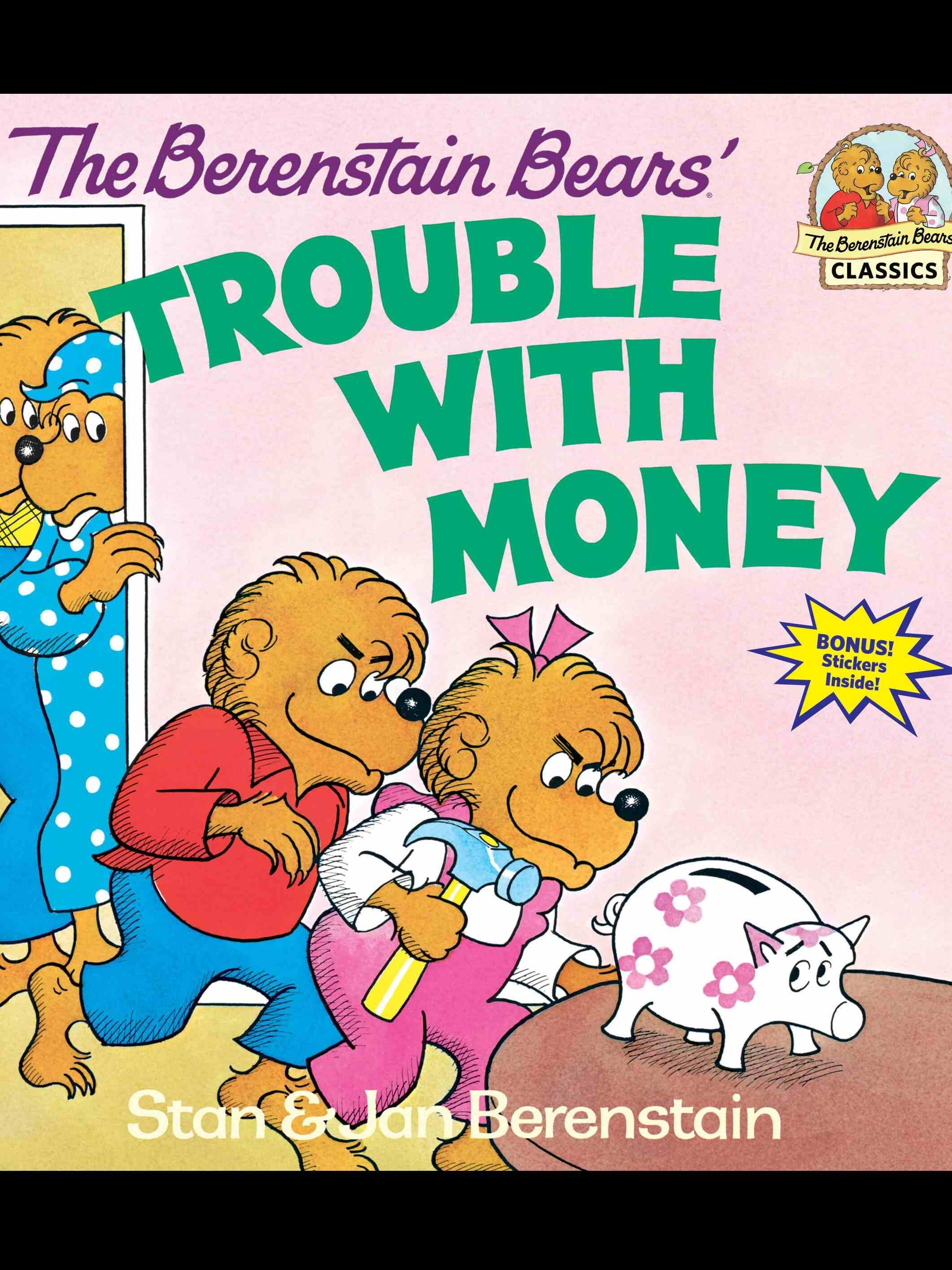
The Berenstain Bears' Trouble with Money
by Stan and Jan Berenstain
Reviewed by Alex Thompson, founder of Kids Financial Guide · Updated October 2026
As an Amazon Associate, Kids Financial Guide earns from qualifying purchases. It never affects our reviews.
The Berenstain Bears' Trouble with Money is a beloved picture book that teaches young children basic money concepts through a relatable, engaging story. Brother and Sister Bear spend every cent they get, then swing the other way once they start earning, and with their parents' help find a middle ground between spending everything and hoarding every coin. The book uses humor, real-life scenarios, and a straightforward approach to financial literacy. While its core lessons remain valuable, some elements—like its focus on cash transactions—feel outdated in today's digital financial world.
Ratings
Educational Value
Engagement
Clarity
Practical Application
Value For Money
What Kids Will Learn
- 1Understanding the value of earning money through work
- 2Finding a balance between spending everything and hoarding every coin
- 3Learning the importance of saving and avoiding impulsive spending
- 4Knowing that a bank is a safe place to keep savings
- 5Gaining an early awareness of financial responsibility
Parental Guidance
- Suitable for all ages
- No concerning content
- Promotes positive values
Full Review
The Berenstain Bears' Trouble with Money remains a delightful, time-tested introduction to financial literacy for young readers. The book's humor and relatable storytelling make fundamental money lessons—like earning, saving, and spending—easily digestible for kids. The dynamic between the Bear family provides a model for real-world parent-child conversations about financial responsibility.
However, given its original 1983 publication, some aspects of the book feel outdated. The story relies entirely on physical cash transactions, with no mention of digital payments, bank transfers, or modern financial tools that today's kids encounter. While the core lessons still hold value, they would benefit from updates or supplementary materials to reflect today's financial landscape.
Overall, this book is a fantastic starting point for teaching young children about money, but parents and educators may need to supplement it with discussions about modern financial tools like debit cards, online banking, and digital saving habits.
Our Verdict
Our take: the humor and the cubs' swing from spending everything to holding on to every coin make the lesson stick for young children, and the story lands on a simple, sound idea: earn your money, then save some of it. Every transaction is in cash, so plan to add your own talk about cards and phone payments. As a first book about money, it still earns its place on the shelf.
The Berenstain Bears' Trouble with Money: our in-depth review
What the story teaches
In this classic, Brother and Sister Bear have a habit that will sound familiar to many parents: money burns a hole in their pockets. Whatever they get goes straight to treats, toys and games, and Mama and Papa Bear decide it is time for a lesson. The cubs then set out to earn money of their own through small businesses, from a lemonade stand to a pet-walking service.
Along the way the book introduces a handful of core ideas. Money comes from work. Spending everything immediately leaves you with nothing for later. Putting money somewhere safe, like a bank, keeps it from slipping away. And once the cubs start earning, they swing too far the other way and get tight-fisted about every coin, so the story ends up showing that the goal is balance, not hoarding. Mama and Papa stay involved throughout, which models the kind of money conversation many families hope to have.
The humor is a big part of why it works. The cubs' business schemes are a little over the top, and children enjoy laughing at their mistakes while quietly absorbing why those mistakes matter.
Reading it together
This is an easy book to read aloud in one sitting, so let the story land first and save most of the questions for afterward. Then flip back to the pages where the cubs are spending and earning and talk through what is happening.
Questions to ask: Where did the cubs' money go at the start of the story? What jobs did they try, and which one would you want to do? Why do you think Mama and Papa wanted them to earn their own money? What is something you wanted that you forgot about a day later? What do you think a bank does with your money?
The book was written long before tap-to-pay and phone wallets, so every transaction uses cash. That can actually be a gift, since coins and bills are easier for young children to understand. Use it as a bridge: ask your child how they think money moves when you pay with a card or phone, and explain that it is still real money even when you cannot see it.
Activities to try at home
Run a mini business weekend. Help your child plan a simple lemonade stand, a cookie sale for neighbors or a small helper service like watering plants. Talk about what supplies cost, how much they collected, and what was left over after paying you back. This makes the idea of profit concrete.
Set up clear savings jars so your child can watch the money pile up. A see-through jar lets a young child watch the pile grow in a way a closed piggy bank does not. If it suits your family, add a simple chart that links a few extra jobs to small earnings, so your child can earn money the way the cubs do.
Do a one-week spending journal with pictures. Every time your child spends money, they draw what they bought. At the end of the week, look at the drawings together and ask which purchases they are still glad about.
Who it's best for
The publisher pitches it at ages 3 to 7. In our view it lands best with children around five to seven, especially those who are just starting to get pocket money and are prone to spending it fast. Families who grew up with the Berenstain Bears will find it a comfortable way to start the money conversation.
Because the examples are entirely cash based, plan to add your own talk about cards, online shopping and digital accounts. It also offers no built-in worksheets, so the activities above or your own simple tools will do the extending. As a gentle, funny first introduction to earning and saving, it still holds up well.
It also works well read alongside a sibling or friend, since Brother and Sister Bear make their mistakes as a pair. Children often enjoy pointing out which cub they are more like, and that small bit of self-recognition can make the saving and earning activities feel like their own idea rather than a parent's rule.
Featured in our guides
Related Resources