Ages 7-12
Paperback, eBook
160
English
2008-11-17
9781598697841
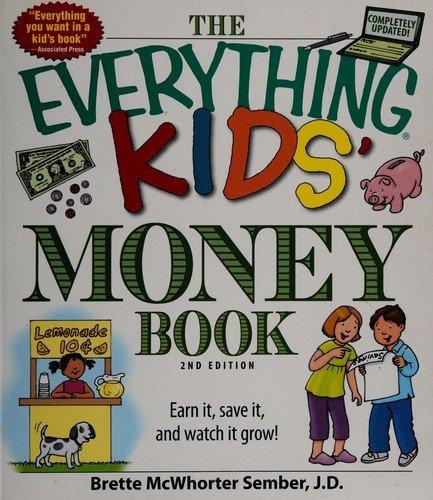
The Everything Kids' Money Book
by Brette McWhorter Sember
Reviewed by Alex Thompson, founder of Kids Financial Guide · Updated November 2026
The short answer
The Everything Kids' Money Book covers a lot of ground for ages 7 to 12, from earning and budgeting to credit cards, interest and stocks (which can lose value), for $10.99. But this edition is from 2008, so its banking and technology sections are out of date; borrow it from a library rather than buy it, and for a newer overview look at Finance 101 for Kids or Get To Know: Money.
| Full title | The Everything Kids' Money Book: Earn It, Save It, and Watch It Grow! |
|---|---|
| Ages | 7-12 (publisher); grades 2-7 at some booksellers |
| Price | $10.99 paperback (list price), or free from your library; also an eBook |
| Length | 160 pages |
| Edition | 2nd edition, Adams Media, November 2008 |
| Covers | How money is made, needs and wants, budgeting, earning, saving and interest, credit cards, stocks, giving to charity, opening a bank account |
| Author | Brette McWhorter Sember, a former attorney and author of books on money and credit |
The Everything Kids' Money Book: Earn It, Save It, and Watch It Grow! is a 160-page nonfiction guide for ages 7 to 12 by Brette McWhorter Sember, a former attorney (Adams Media, 2nd edition, 2008). The publisher says kids learn how coins and bills are made, what money can buy, how credit cards work and ways to watch money grow, from savings to stocks, and that this edition added material on online banking, opening a bank account and saving allowance. Its contents also cover needs and wants, budgeting, earning money and giving to charity. Those online-banking sections date from 2008.
Ratings
Educational Value
Engagement
Clarity
Practical Application
Value For Money
What Kids Will Learn
- 1Where money comes from and what it can buy
- 2How saving and interest make money grow
- 3How credit cards work, and that unpaid balances cost interest
- 4Needs versus wants, and how to make a simple budget
- 5The basics of stocks, and that they can lose value
Parental Guidance
Tips for using this book:
- Read the book together and discuss the financial concepts presented
- Use the book as a starting point for conversations about money management
- Try out some of the activities and exercises with your child
- Connect the book's lessons to real-world experiences in your family
Full Review
The Everything Kids' Money Book is a broad nonfiction guide for ages 7 to 12 by Brette McWhorter Sember, a former attorney who has written about credit for adults. The publisher says kids learn how coins and bills are made, what money can buy, how credit cards work and ways to watch money grow, from savings to stocks; the contents also cover needs and wants, budgeting, earning money and giving to charity. The second edition added material on online banking, opening a bank account and saving allowance. The trouble is that the second edition dates from 2008. Online banking, investing and financial technology have changed a great deal since then, and the book was written before today's banking apps, app-based kids' debit cards and payment apps. The core ideas, budgeting, saving, interest and the cost of credit card debt, still hold. It is inexpensive and easy to find in libraries, so it can work as a dip-in reference, but for a single up-to-date overview we prefer Finance 101 for Kids for ages 8 to 12 or Get To Know: Money for ages 7 to 9.
Our Verdict
Our take: a wide-ranging money book whose age shows. Borrow it rather than buy it, read the saving, interest and credit card sections together, and swap its 2008 banking examples for the account or app your family actually uses.
The Everything Kids' Money Book: our in-depth review
What the book covers
The publisher describes a book that starts with money itself, how coins and bills are made and what money can buy, then explains how credit cards work and ways to watch money grow, from savings to stocks. Its contents also cover needs and wants, budgeting, earning money and giving to charity.
The second edition, from 2008, added sections on online banking, opening a bank account and saving allowance.
What's out of date
Banking for kids looks very different now. Many families use a kids' debit card or a banking app (before choosing one, check its monthly fees, the parent controls and what data it collects about your child), and teens may send money through payment-app accounts a parent sponsors (most payment apps are 18+ on their own); a payment to a stranger usually can't be reversed. Savings rates have also moved a lot since 2008. Today the average savings account pays under 1% a year (the FDIC's national average was about 0.4% in autumn 2026), and the best-paying online banks pay around 4% (Bankrate's top rates, November 2026); check current rates before you choose. The book can't cover any of that, so treat its technology examples as history. One rule to add that it won't have: never share a card number, PIN, password or login code with anyone, including someone online who says they're from the bank or a game.
What still holds: saving a little regularly adds up, interest is what a bank pays you for letting it use your money, or what you pay to borrow, and a credit card balance you don't pay in full each month costs interest (paying late adds fees and can hurt your credit). Kids can't get their own credit card; under 18, they can only be added as an authorized user on a parent's card (card companies set their own minimum ages). Money in a bank insured by the FDIC (the US government agency that protects bank deposits) is protected up to $250,000 per depositor, per insured bank, for each ownership category, but investments are not: stocks can lose value as well as grow, and kids can't invest on their own; a parent opens and oversees any account.
Reading it together
Treat it as a reference: let your child pick a section that interests them, read it together, and then look at how the same thing works today.
Questions to talk about: Where does a bank get the money to pay interest? What happens if you don't pay a credit card bill in full? What could you do to earn money, and how would you split it between spending, saving and giving? (If an idea means selling to people, keep it supervised: a parent handles any online selling or payments, and kids don't share their address, phone or photos with buyers, and any in-person handover happens with an adult in a public place.)
For a hands-on start tonight, look at a sample bank statement online (or your child's own savings account, if they have one; cover the account number) and find the balance and any interest paid.
Who it's best for
The publisher lists it for ages 7 to 12. It fits best from about 9, for a child who likes facts and can read nonfiction on their own; read it a section at a time with younger kids.
For a newer overview, Finance 101 for Kids (ages 8-12) and Get To Know: Money (ages 7-9) cover similar ground. Many libraries carry The Everything Kids' Money Book, which is the best way to try it.
Frequently asked questions
What age is The Everything Kids' Money Book for?
The publisher lists it for ages 7 to 12. It is nonfiction with a lot of information, so 9- to 12-year-olds who like facts will get the most from it; with a 7- or 8-year-old, read a section at a time together.
Is The Everything Kids' Money Book out of date?
Partly. The current edition came out in 2008, before today's banking apps, app-based kids' debit cards and payment apps, so its sections on online banking and technology are dated. The basics, such as budgeting, saving, interest and how credit cards charge interest, still hold. Check current rates and tools with your child.
What does The Everything Kids' Money Book teach?
The publisher says kids learn how coins and bills are made, what money can buy, how credit cards work and ways to watch money grow, from savings to stocks. The contents also cover needs and wants, budgeting, earning money and giving to charity, and this edition added online banking and opening a bank account.
Is The Everything Kids' Money Book worth buying?
Borrow it first. At $10.99 it is inexpensive, but the 2008 edition is dated, and newer books cover the same ground: Finance 101 for Kids (ages 8-12) or Get To Know: Money (ages 7-9).
Related Resources