Ages 7-10
Hardcover, Paperback, eBook, Audiobook
N/A
English
2021-09-15
9780807508121
Billy the Borrowing Blue-Footed Booby
by Sheila Bair
Reviewed by Alex Thompson, founder of Kids Financial Guide · Updated October 2026
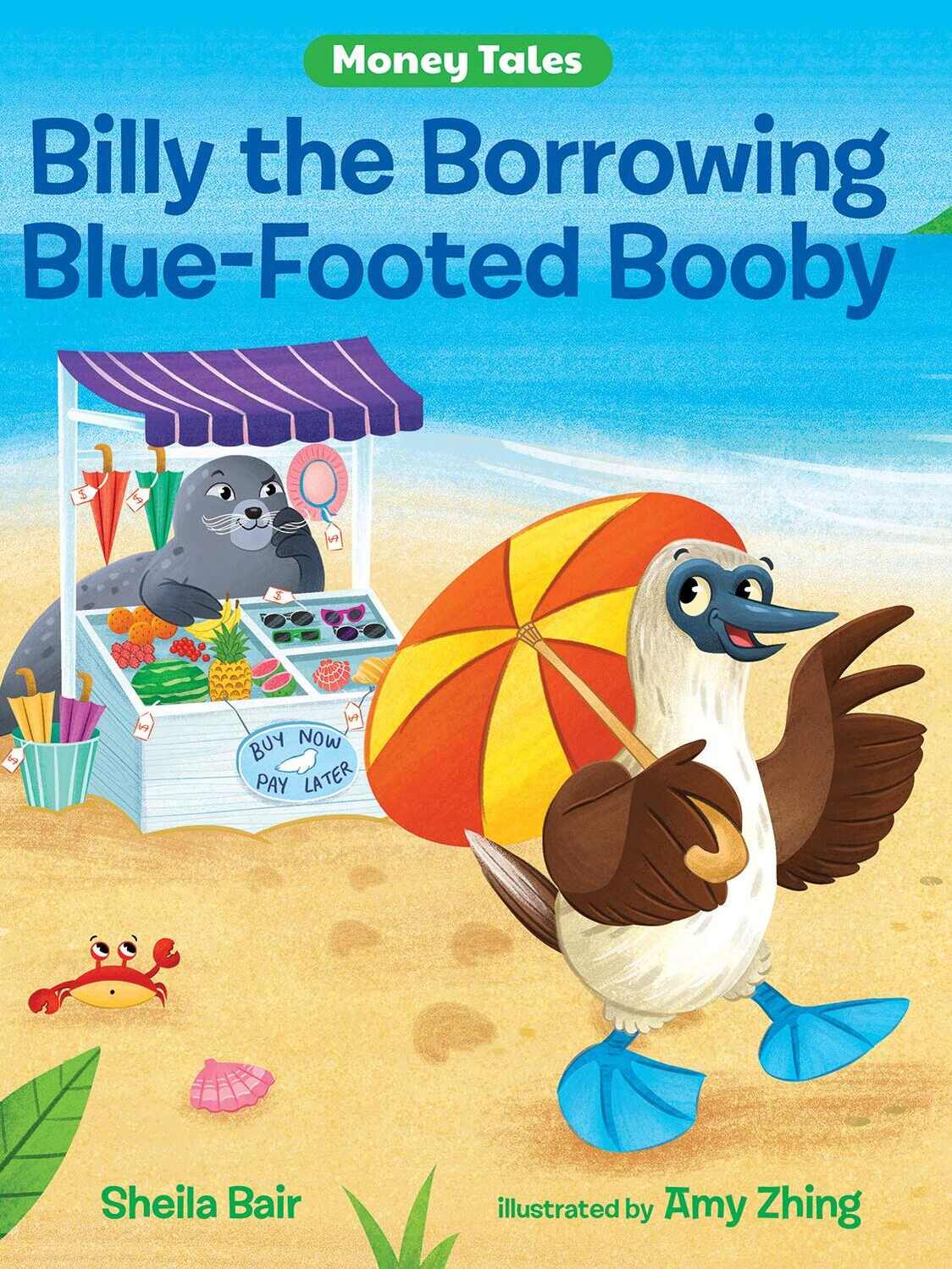
Billy the Borrowing Blue-Footed Booby is a rhyming picture book from Sheila Bair's Money Tales series, illustrated by Amy Zhing. Billy wants what his friends have, so he keeps buying from Selling Seal without listening to what each purchase will really cost him, and in the end he loses everything. It is a short, funny cautionary tale about borrowing and wants versus needs, and the publisher offers a free teacher's guide for extra discussion and activities.
Ratings
Educational Value
Engagement
Clarity
Practical Application
Value For Money
What Kids Will Learn
- 1Understanding the risks of borrowing too much
- 2Telling needs from wants before buying
- 3Seeing that buying now and paying later can cost more than the price tag
- 4Encouraging discussions about financial responsibility from an early age
Parental Guidance
Tips for using this book:
- Read the book together and discuss the financial concepts presented
- Use the book as a starting point for conversations about money management
- Try out some of the activities and exercises with your child
- Connect the book's lessons to real-world experiences in your family
Full Review
Sheila Bair takes an important financial lesson and wraps it in an entertaining, easy-to-follow rhyming story. Billy's borrowing habits start out amusing, but they quickly spiral into a cautionary tale about overextending yourself. The book does a fine job of introducing borrowing in a fun and engaging way, helped by colorful illustrations, and the publisher's free teacher's guide adds activities if you want to go further. Some of the ideas might be tricky for the youngest listeners, so parents and educators should be ready to jump in with explanations. While the book is great for discussing borrowing, it would have been even stronger if it covered other financial pillars, like earning or investing. Overall, it's an engaging, valuable way to start money conversations in the early grades.
Our Verdict
Our take: this is one of the clearest picture books we've found on borrowing. The story makes the cost of buying now and paying later easy to see, and Billy's losses land without being scary. Younger children will need a grown-up to explain the borrowing part, but it is an excellent springboard for a money conversation.
Supplemental Materials
- 1Free Teacher's Guide (PDF from Albert Whitman)
- 2Money Tales Bingo (PDF from EconEdLink)
Billy the Borrowing Blue-Footed Booby: our in-depth review
What the story teaches
Billy is a blue-footed booby on the Galápagos who wants things now. First it is an umbrella, so he goes to Selling Seal, but he doesn't listen when Seal explains what that umbrella will end up costing him. Then he wants a fan like Arlene the tortoise's, a purple-striped wig like Ig the iguana's, neon-green shoes like Niels the lizard's, and Seal's own anchovy grill. Bit by bit, what he owes piles up, and Billy ends up losing everything.
The book is one of Sheila Bair's Money Tales, and it focuses squarely on borrowing. Children see that borrowing is not free money and that buying now and paying later can cost more than the price tag. Billy's twin sister Bess and his friends try to help him, which opens the door to talking about waiting, saving up and telling needs from wants.
Using sardines instead of dollars is a clever choice. It lets young children follow the idea of owing without getting lost in real-world numbers.
Reading it together
Ideas like borrowing and paying back extra may be new to your child. Before reading, try a quick explanation in kid terms: borrowing means using something now and giving it back later, and interest means you have to give back a little extra for the favor.
Questions to pause on: Why does Billy keep buying things instead of waiting? Seal tells Billy what the umbrella will really cost, so why doesn't he listen? Which of the things Billy wants are needs, and which are wants? What is his sister Bess trying to tell him? What could Billy have done if he wanted something but did not have enough yet?
Expect follow-up questions. Your child may ask whether grown-ups borrow money too. That is a good opening to explain, at whatever level feels right, that families sometimes borrow for big things like a house or car, and that the key is borrowing carefully and having a plan to pay it back.
Activities to try at home
Play a sardine game with crackers, buttons or pennies (our idea, not from the book). Lend your child five items and tell them they owe back six at the end of the day. Then lend five more. Let them see how quickly the amount they owe climbs, and then compare it to simply waiting and saving five of their own.
Make a borrow or wait chart. List a few things your child wants and next to each one ask: could I save for this, or would I need to borrow? Talk about which items are worth waiting for. You can also set up a family rule that any money borrowed from a sibling or parent gets written on a small IOU card, so kids get used to tracking what they owe.
Keep a simple savings goal next to the book. Each time your child adds to it, point out that every coin saved is one they will never have to pay back with extra.
Who it's best for
The publisher recommends this book for ages 7 to 10 (grades 1 to 5), and some libraries shelve it for ages 4 to 8. Six- and seven-year-olds will enjoy Billy's antics and the bright illustrations, but you will want to do more explaining as you go; older kids can dig into why borrowing costs extra.
It is especially helpful for children who borrow toys, treats or money from siblings and friends and are not always great at returning them. Because it centers on one topic, pair it with books about earning and saving for a fuller picture.
Parents may appreciate that the author is a former chair of the FDIC, the US agency that insures bank deposits, which shows in how clearly the story lays out the trap of easy borrowing. Read it once for fun, then come back to it whenever borrowing comes up in daily life, such as a sibling asking for an advance on allowance.
Featured in our guides
Related Resources