Ages 3-10
Hardcover
N/A
English
2020-11-17
9781942121411
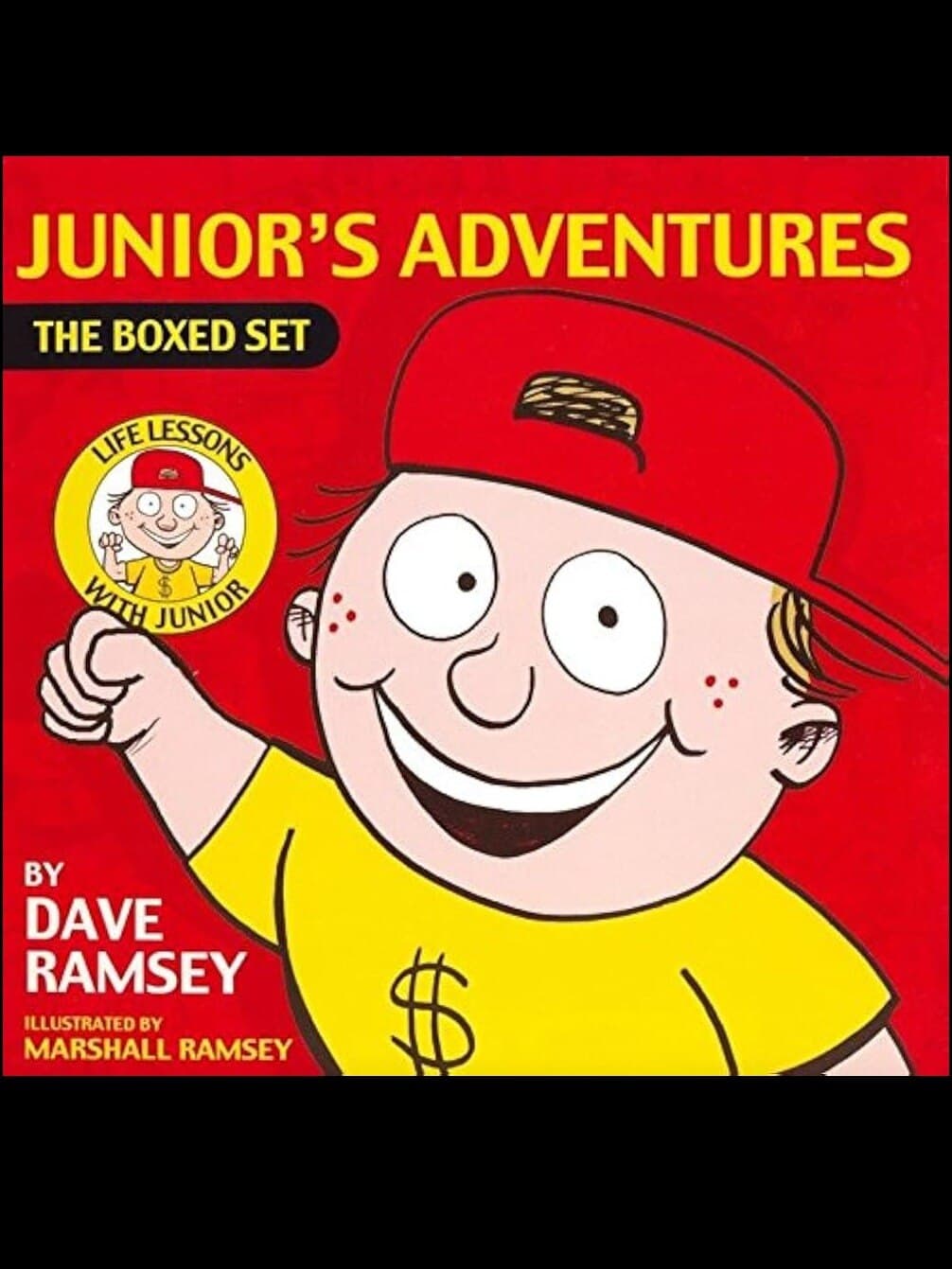
Junior's Adventures Storytime Collection
by Dave Ramsey
Reviewed by Alex Thompson, founder of Kids Financial Guide · Updated October 2026
Junior's Adventures Storytime Collection gathers six Junior stories by Dave Ramsey into one 176-page hardcover. Each story centers on one money value: working to earn, doing what's right, avoiding debt, saving ahead, spending carefully and giving. The publisher pitches it at ages 3 to 10, and the bright, character-driven stories give parents an easy way to start talking about money at home.
Ratings
Educational Value
Engagement
Clarity
Practical Application
Value For Money
What Kids Will Learn
- 1Understanding the value of work and earning money
- 2Choosing honesty, even when money is involved
- 3Understanding that borrowed money has to be paid back
- 4Planning and saving ahead for a big expense
- 5Thinking before spending
- 6Appreciating the joy of giving to others
Parental Guidance
Tips for using this book:
- Read the book together and discuss the financial concepts presented
- Use the book as a starting point for conversations about money management
- Try out some of the activities and exercises with your child
- Connect the book's lessons to real-world experiences in your family
Full Review
Junior's Adventures Storytime Collection makes money lessons feel like ordinary storytime. Across six stories, Junior and his friends work to earn money for something he wants (The Super Red Racer), choose to do the right thing (The Big Payoff), learn the downside of borrowing (Battle of the Chores), plan ahead for a big expense (My Fantastic Field Trip), think before spending (Careless at the Carnival) and find ways to give (The Big Birthday Surprise). Each story sticks to one idea, which keeps it simple enough for a young listener.
The lessons follow Dave Ramsey's approach, so debt is presented as something to avoid, and a Bible verse appears inside the front cover. The stories are set in everyday kid life like chores, field trips and carnivals, so cards, banks and digital payments are not the focus; parents will want to add that piece as kids grow. The book also does its best work when an adult reads along and talks through Junior's choices.
Overall, it is a strong first money book for preschool and early elementary kids. The publisher's 3-10 range means it can stay on the shelf for a few years, though older kids may soon want something with more depth.
Our Verdict
Our take: this is one of the easiest ways to start money talks with a preschooler. Each story focuses on one habit, from earning to giving, and seeing how Junior's choices turn out makes the lesson stick without a lecture. Pair it with real coins and jars at home, and add lessons on cards and digital money yourself as your child gets older.
Junior's Adventures Storytime Collection: our in-depth review
What the book teaches
This hardcover gathers six Junior stories into one 176 page volume, and each story is built around a single money value. In The Super Red Racer, Junior works to earn money for something he really wants. The Big Payoff is about doing what's right. Battle of the Chores shows the downside of borrowing. My Fantastic Field Trip is about planning ahead for a big expense, Careless at the Carnival is about spending carefully, and The Big Birthday Surprise looks at the many ways to give.
Junior and his friends Maddie, Billy and Rachel face small dilemmas that feel real to a young child, and readers get to see how each choice turns out. That turns an abstract idea like saving up into something a child can picture.
The stories reflect Dave Ramsey's money approach, where debt is something to avoid, and a Bible verse (Proverbs 22:6) is printed inside the front cover. The settings are everyday kid life, so cards, apps and online spending are not the focus.
Reading it together
Read one story per sitting. The collection is long enough that trying to finish it in one go will lose a young listener, and taking one value at a time gives each idea room to sink in.
Afterwards, ask questions that link the story to your child's life. After The Super Red Racer: What is a job you could do at home? After Careless at the Carnival: What would you have done with Junior's money? After The Big Birthday Surprise: Who could we surprise with a gift, and how would we pay for it?
Let your child predict what Junior will do before you turn the page at a decision point. Guessing, then seeing the result, is a gentle way to practice thinking through consequences.
Activities to try at home
An easy follow-up is three envelopes or clear jars labeled give, save and spend, so your child can split any money they earn or receive. Clear containers are especially good at this age because a child can watch the savings pile grow.
Pair it with a short chore list where certain jobs earn a little money, so the earning story becomes something they live. Then choose a savings goal together, like a small toy, and track it on a paper chart with a box to color for each coin added. When they reach the goal, let them pay at the register themselves.
Because the book doesn't cover cards or apps, you can add the modern piece yourself. Once your child is comfortable with the jars, show them how a card or a phone payment still takes real money from an account. A simple line like, the card is just a different jar, helps bridge the gap.
Who it's best for
The publisher aims the collection at ages 3 to 10. In our view it fits best from preschool through about second grade. Younger children will enjoy the characters and pictures, while kindergarteners and first graders are ready to talk through the choices and start using jars of their own. The square hardcover format also works for group reading in a classroom or library setting.
It suits parents who are ready to be involved, since the talk after each story does the real teaching. If you want a single book that touches every basic money habit, this is one of the most complete options for little kids. Plan to add your own lessons on digital money as your child grows, and older elementary children may soon want something with more depth.
Featured in our guides
Related Resources