Ages 3-7
Hardcover, eBook
40
English
2012-09-11
9780375858833
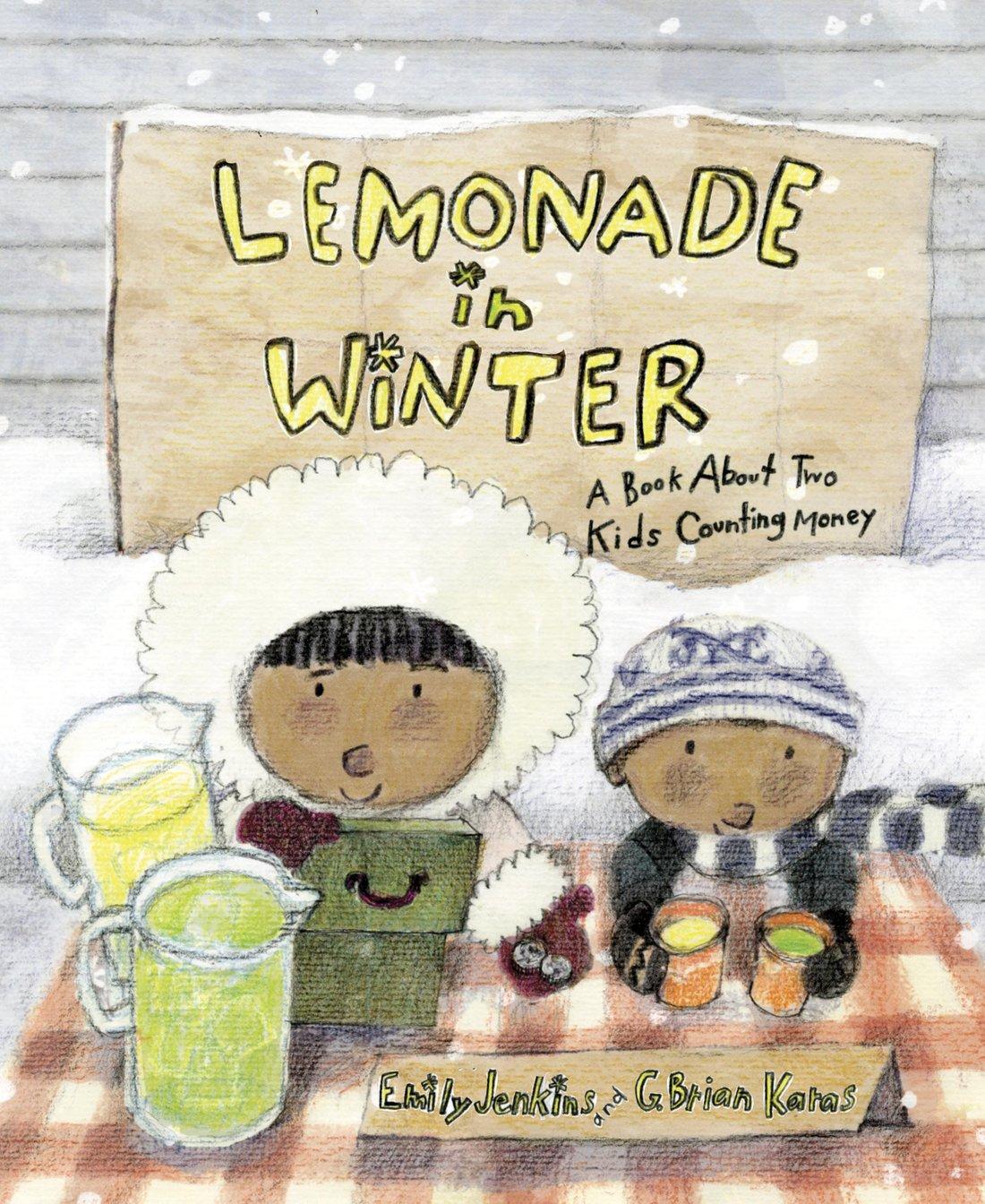
Lemonade in Winter
by Emily Jenkins, illustrated by G. Brian Karas
Reviewed by Alex Thompson, founder of Kids Financial Guide · Updated November 2026
The short answer
Lemonade in Winter is our pick for showing 3- to 7-year-olds the difference between earning money and making a profit, through a brother and sister's winter lemonade stand and a page on coins and dollars at the back. It is a $19.99 hardcover, so check your library first, and the CFPB's free parent guide adds questions and activities.
| Ages | 3-7 (publisher; preschool to grade 2) |
|---|---|
| Price | $19.99 hardcover (list price), or free from your library; also an eBook |
| Length | 40-page picture book with a page explaining coins and dollars |
| Edition | Hardcover and eBook, September 2012 |
| Covers | Running a small business, buying supplies, setting a price, counting coins, earning vs. profit, sticking with it |
| Author | Emily Jenkins; illustrated by G. Brian Karas |
Lemonade in Winter: A Book About Two Kids Counting Money is a 40-page picture book for ages 3 to 7 by Emily Jenkins, illustrated by G. Brian Karas (2012), and a Publishers Weekly Best Children's Book of 2012. Pauline and her little brother John-John set up a lemonade stand in the middle of winter, buy supplies with their quarters, and count what they earn. They don't make a profit, but they keep going. A page at the back explains pennies, nickels, dimes, quarters and dollars, and the CFPB offers a free parent reading guide.
Ratings
Educational Value
Engagement
Clarity
Practical Application
Value For Money
What Kids Will Learn
- 1The names and values of pennies, nickels, dimes, quarters and dollars
- 2A business has costs before it makes any money
- 3Earning money is not the same as making a profit
- 4Lowering a price can bring customers but means less money per sale
Parental Guidance
Tips for using this book:
- Read the book together and discuss the financial concepts presented
- Use the book as a starting point for conversations about money management
- Try out some of the activities and exercises with your child
- Connect the book's lessons to real-world experiences in your family
Full Review
Lemonade in Winter shows a lemonade stand that does not end with a jar full of money. Pauline and her little brother John-John decide to sell lemonade in the middle of winter. They count out quarters they find, buy lemons, limes, sugar and cups, and set up outside in the cold. Customers are few, so they try a sale. When they count up at the end, they have taken in some money, but less than they spent. The CFPB, which includes it in its Money as You Grow Bookshelf, sums up the lesson: they earn money but don't make a profit, and still have enough for a treat. The coin counting along the way gives preschoolers and early readers real math to do. A page at the back explains each coin. It won a starred review from Publishers Weekly and was named one of its best children's books of 2012. Two things to know: it is a $19.99 hardcover, and it shows only cash, so add a word about cards and apps.
Our Verdict
Our take: this is our pick for showing young kids that a business has costs before it has profits. Read it with a handful of real coins (stay close with under-5s, since coins are a choking hazard), count along with Pauline, and talk about what the kids could have done differently. Then use the CFPB's free parent guide for more questions.
Lemonade in Winter: our in-depth review
What the book teaches
Pauline and John-John want to sell lemonade, limeade and lemon-limeade, even though it is winter. Before they sell a single cup, they spend all the quarters they can find on lemons, limes, sugar and cups. That is the first lesson: a business has costs. They set a price, wait for customers in the cold, and try a sale when business is slow.
At the end they count what they have. They took in money, but less than they spent, so they made no profit. The CFPB notes they still have enough for a treat. Along the way the book counts coins out loud, and a page at the back, in which Pauline explains money to John-John, covers pennies, nickels, dimes, quarters and dollars.
Earning is not the same as profit
This is the idea worth slowing down for. Earning is the money that comes in. Profit is what is left after you pay for what you used. If you spend $6 on supplies and take in $4, money came in, but you lost $2. That is exactly what happens in the book. It's easy for young kids to think any money coming in means they made money, and this book shows gently why that isn't so.
You can make it concrete without any math beyond counting. Use pennies or buttons as counters (stay close with under-5s, since both are a choking hazard): one pile for what the supplies cost and one for what came in, about 10 in each at most, and ask which pile has more. Mixed coins can mislead preschoolers, who judge a pile by how many coins or how big they look. With 6- and 7-year-olds, use real coin values and try the subtraction too.
Reading it together
Read it once for the fun of it. On the second read, keep a handful of real coins nearby and count along whenever Pauline counts. With a 3- or 4-year-old, just name the coins and stay close while they handle them, since coins are a choking hazard.
Questions to talk about: What did Pauline and John-John have to buy before they could sell anything? Why did they lower their price? Did they make money or lose money? What could they do differently next time, like pick a warmer day or sell something people want in winter?
For a hands-on start tonight, plan a pretend stand at home: list what you would need to buy, price each item in coins, and add it up. With a preschooler, make every item cost one or two pennies and count them out together. If your child wants to run a real stand, keep it right outside your home or at a family event, with you there, and handle the money together. Wash hands and the pitcher first, use clean water and ice, list what's in the drink in case of allergies, dress warmly if it's cold, and check your town's rules, since some places require a permit even for a kids' stand.
Who it's best for
The publisher lists it for ages 3 to 7, and it fits best from about 4 to 7, when kids are learning coin names and starting to count money. It is ideal for a child who wants to run a lemonade stand, and for any family that wants a story about trying hard when things don't go to plan.
For an 8- to 12-year-old who wants a longer lemonade-stand story, The Lemonade War is a chapter book about two siblings competing to sell the most. The CFPB's free Lemonade in Winter parent reading guide is on its Money as You Grow Bookshelf. Many libraries carry the book, which helps with the $19.99 hardcover price.
Frequently asked questions
What age is Lemonade in Winter for?
The publisher lists it for ages 3 to 7 (preschool to grade 2). Preschoolers enjoy the story and naming the coins; 5- to 7-year-olds can follow the money math. The CFPB's free parent guide has activities marked for ages 3+, 5+ and 7+.
What does Lemonade in Winter teach kids about money?
That earning money is not the same as making a profit. Pauline and John-John buy lemons, limes, sugar and cups, sell lemonade, and count their coins, but they take in less than they spent. It also shows coin values, lowering a price when customers are few, and sticking with it.
Is there a free guide for Lemonade in Winter?
Yes. The Consumer Financial Protection Bureau (CFPB), a US government agency, publishes a free parent reading guide for it as part of its Money as You Grow Bookshelf, with questions and activities on solving problems, spending and being flexible. Search for "CFPB Lemonade in Winter parent guide" to find the PDF.
Is Lemonade in Winter a good book for a first lemonade stand?
Yes, for kids 4 to 7. It shows the costs that come before a single sale: lemons, limes, sugar and cups, bought with quarters the kids find. If your child wants to run one for real, keep it right outside your home or at a family event with you there. For older kids who want a longer story about a lemonade business, The Lemonade War is a chapter book for ages 8 to 12.
Related Resources