Ages 7-10
Paperback, eBook
32
English
2017-03-01
9780807570951
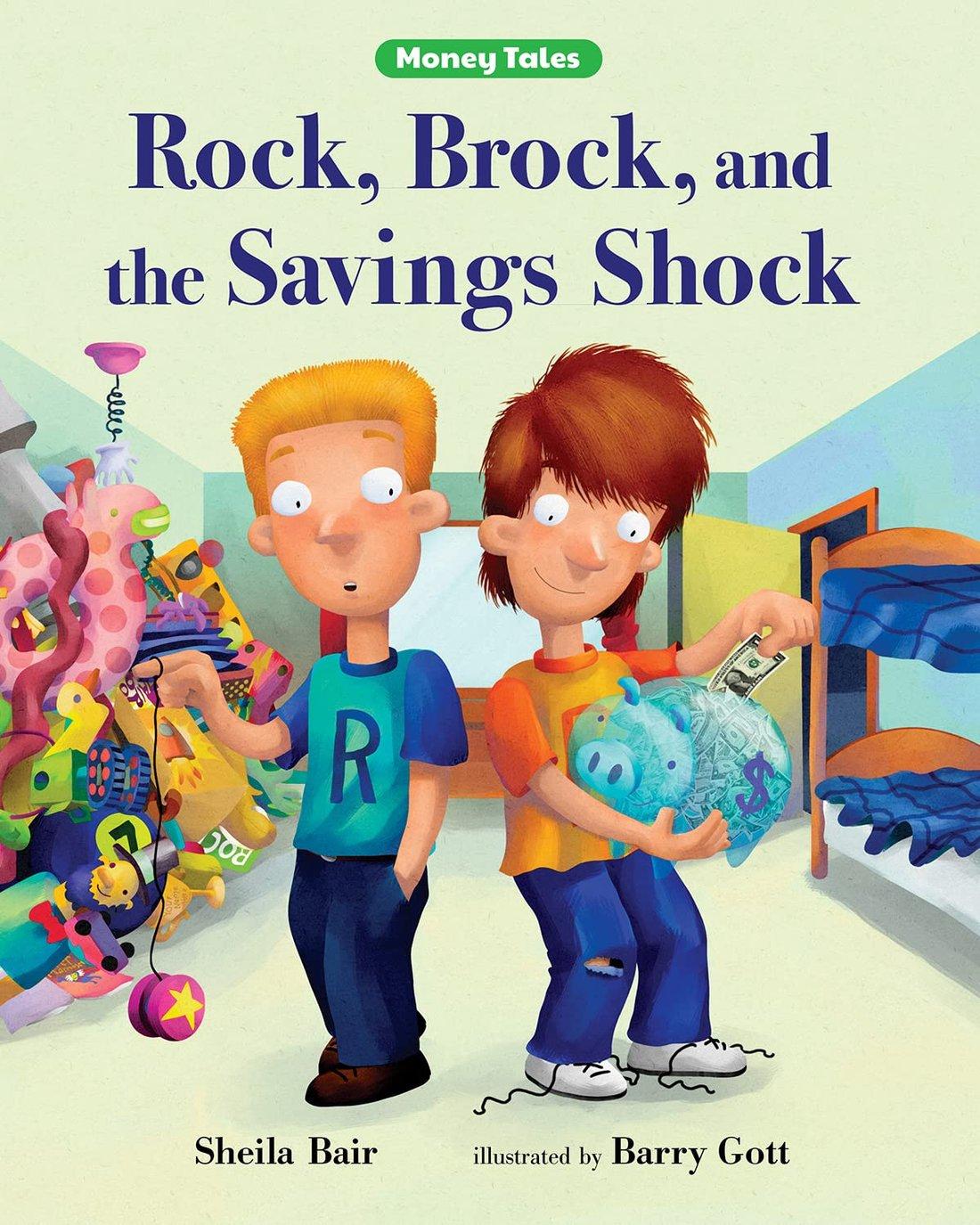
Rock, Brock, and the Savings Shock
by Sheila Bair, illustrated by Barry Gott
Reviewed by Alex Thompson, founder of Kids Financial Guide · Updated November 2026
The short answer
Rock, Brock, and the Savings Shock is our pick of picture books for showing 7- to 10-year-olds why saving early pays off, with a spender and a saver twin and Gramps' matching deal, for $9.99. Explain that Gramps is far more generous than any bank: real savings grow slowly, by a small percentage each year, not hundreds of times over in one summer.
| Ages | 7-10 (publisher; grades 1-5) |
|---|---|
| Price | $9.99 paperback (list price), or free from your library; also an eBook |
| Length | 32-page picture book |
| Edition | Albert Whitman paperback, March 2017 (first published 2006) |
| Covers | Saving vs. spending, a savings match, how savings grow on themselves, starting late |
| Author | Sheila Bair, chair of the FDIC from 2006 to 2011; illustrated by Barry Gott |
Rock, Brock, and the Savings Shock is a 32-page picture book for ages 7 to 10 by Sheila Bair, former chair of the FDIC, illustrated by Barry Gott (Albert Whitman, first published 2006; paperback 2017). Twin brothers Rock and Brock earn a dollar a week from Gramps for ten weeks, and he matches the money they save. Rock spends his on novelties while Brock saves and ends the summer with $512, far more than ten dollars plus a simple match, a vivid first look at savings that grow on top of themselves.
Ratings
Educational Value
Engagement
Clarity
Practical Application
Value For Money
What Kids Will Learn
- 1Money saved can grow, while money spent is gone
- 2A savings match adds to what you put in
- 3Growth on top of growth makes savings speed up over time
- 4It's never too late to start saving
Parental Guidance
Tips for using this book:
- Read the book together and discuss the financial concepts presented
- Use the book as a starting point for conversations about money management
- Try out some of the activities and exercises with your child
- Connect the book's lessons to real-world experiences in your family
Full Review
Rock and Brock are twins with opposite habits. When Gramps offers each of them a dollar a week for ten weeks and promises to match the money they save, Brock saves and Rock spends his on novelties. By the end of the summer Brock has $512 and Rock has nothing saved, until Brock shows him that it's never too late to start. Sheila Bair, who chaired the FDIC from 2006 to 2011, wrote it, and Barry Gott illustrated it. The book's strength is that it makes something abstract, savings growing on themselves, visible and a little shocking, which is the point of the title. Its one big gap as a money lesson is that Gramps is impossibly generous. A real savings account pays under 1% a year on average (the FDIC's national average was about 0.4% in 2026) and around 4% at the best-paying online banks, so kids need to hear that the idea is real but the speed is make-believe. It also treats spending only as a mistake, so pair it with a jar for fun money. For a 7- to 10-year-old who wants everything now, it is our pick of stories about why waiting pays.
Our Verdict
Our take: this is our pick for showing kids why saving early matters, and a perfect partner to Billy the Borrowing Blue-Footed Booby by the same author. Talk through how Brock's pile grew, then offer your own small, realistic match, like 10 cents for every new dollar saved, so the lesson becomes a habit.
Rock, Brock, and the Savings Shock: our in-depth review
What the book teaches
Gramps makes the twins a deal for the summer, in rhyming verse: a dollar each week for ten weeks, and he will match the money they save. Money they spend earns nothing. Rock spends his dollars on novelties as soon as he gets them. Brock saves, and by the end of the summer he has $512, far more than ten dollars plus a simple match would give, because Gramps' deal makes his whole savings pile grow, not just each new dollar.
The lesson is the one in the title: saving early can lead to a surprising result, because growth builds on growth. Compound interest works on the same idea, much more slowly: in a real account you earn interest on your interest, not just on the money you put in. The story ends with Brock showing Rock that it's never too late to start saving.
Gramps is more generous than any bank
The deal in the story is make-believe speed. A savings account at a bank or credit union pays interest of under 1% a year on average (the FDIC's national average was about 0.4% in 2026) and around 4% at the best-paying online banks, so $10 might earn a few cents to a few dimes in a year. Tell your child the idea is real but the speed is not, and that anyone who promises to double their money fast is not telling the truth.
The closest real thing to Gramps is a match from a person who wants to help you save, like a parent or grandparent, or, for adults, an employer that matches retirement savings. That makes the book a good way to offer a small family match of your own.
Money in a savings account at an FDIC-insured bank is protected (the US government insures deposits up to $250,000 per depositor, per insured bank, for each ownership category, if the bank fails). Sheila Bair ran the FDIC, the agency that provides that insurance, from 2006 to 2011.
Reading it together
Read it once for the story. On the second read, talk about how far apart the twins end up and why. Then try a pretend math game (no real account works like this): if a pile of money doubles every week, it goes $1, $2, $4, $8, $16 and reaches $512 by week ten. With a 7-year-old, use coins or counters for the first four or five weeks so they can see the pile double, then just say the bigger numbers together. Older kids can write the totals all the way to $512.
Questions to talk about: Why did Brock end up with so much more? How did Rock feel at the end, and what would you tell him? Is spending ever a good choice? What would you save for if someone matched your savings?
For a hands-on start tonight, set up a spend jar and a save jar, and offer a small match on the save jar, say 10 cents for every new dollar your child adds, paid once a week, or any match that fits your budget, even a sticker or an extra turn choosing the weekend activity. After a month, count it together and talk about where the extra came from.
Who it's best for
Albert Whitman lists it for ages 7 to 10, and it fits best around 7 to 9, when kids can follow a weekly total but still love a picture book. It is especially good for a child who spends money as soon as they get it, and for siblings with different habits.
Pair it with Billy the Borrowing Blue-Footed Booby, Sheila Bair's book about borrowing, to cover saving and debt in two short reads. Many libraries carry it; the 2017 paperback (ISBN 9780807570951) is the edition to buy.
Frequently asked questions
What age is Rock, Brock, and the Savings Shock for?
Albert Whitman lists it for ages 7 to 10 (grades 1 to 5). Six- and 7-year-olds can enjoy the saver-versus-spender story, and 8- to 10-year-olds can try the doubling math exercise in our reading tips, younger ones with a grown-up.
How does Brock end up with $512?
Gramps gives each twin a dollar a week for ten weeks and matches the money they save. A simple match on ten $1 gifts would come to just $20; Brock reaches $512 because Gramps' deal makes his whole savings pile grow, not just each new dollar. That is the shock in the title. Real savings accounts pay much less, under 1% a year on average (the FDIC's national average was about 0.4% in 2026) and around 4% at the best-paying online banks.
Is Rock, Brock, and the Savings Shock by the same author as Billy the Borrowing Blue-Footed Booby?
Yes. Both are by Sheila Bair, who chaired the FDIC, the US agency that insures bank deposits. Billy is about borrowing and debt; Rock, Brock is about saving and how it grows, so the two pair well.
Are there free lessons for Rock, Brock, and the Savings Shock?
Yes. The Federal Reserve's education site, and the Atlanta Fed, offer a free lesson plan built on the book for grades 3 to 5, on saving and opportunity cost (what you give up when you choose one thing over another). It works at home too.
Related Resources