Ages 13-18
Paperback, eBook
108
English
2015-08-31
9780996519403
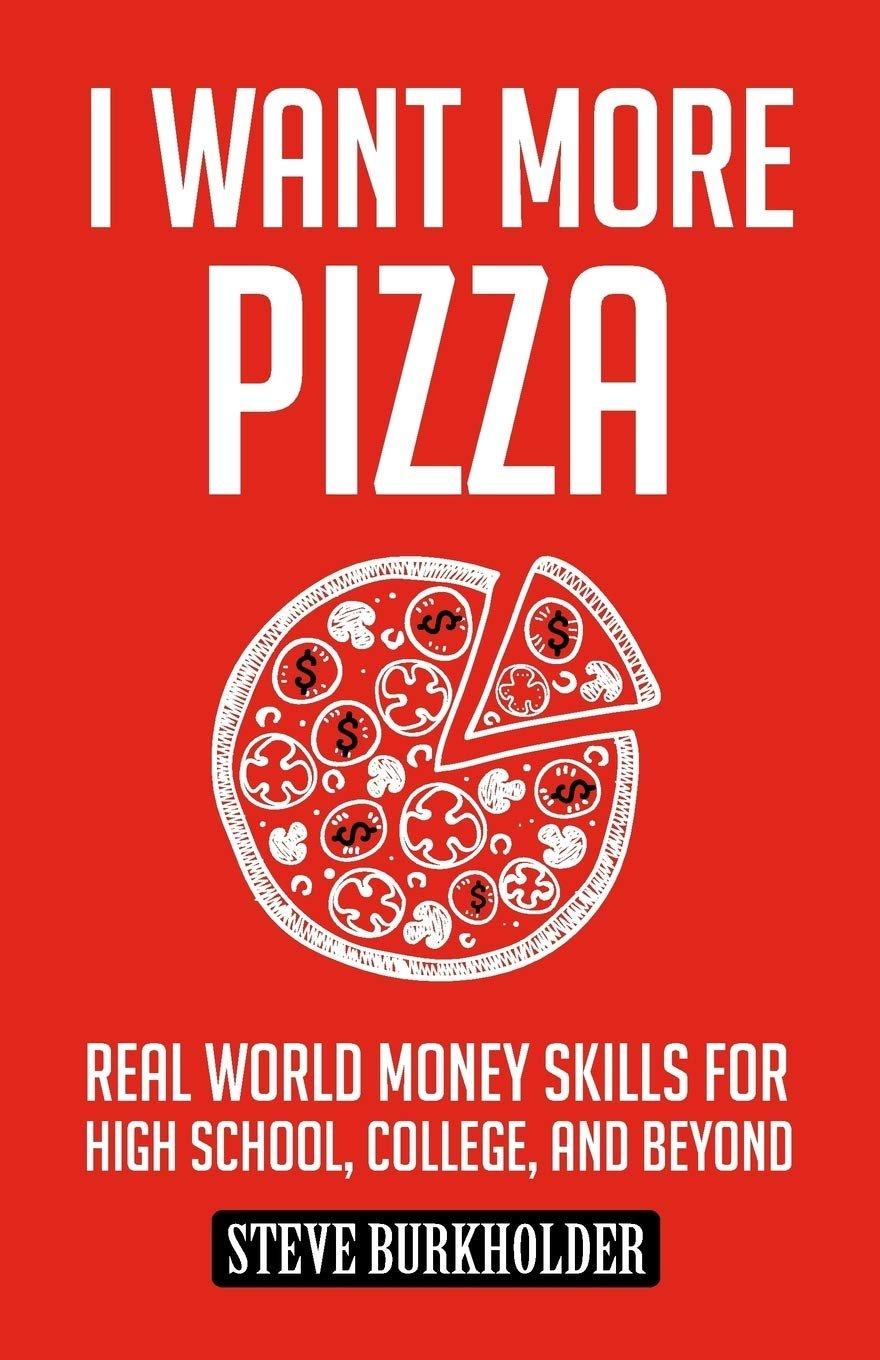
I Want More Pizza
by Steve Burkholder
Reviewed by Alex Thompson, founder of Kids Financial Guide · Updated November 2026
The short answer
I Want More Pizza is a short, inexpensive first money book for teens 13 to 18, covering saving, goals, investing, credit cards and student loans in about 108 pages for $9.99. It comes from a small publisher and some readers find it thin, so for one fuller guide choose How to Money; this one suits a teen who wants a quick start or a class that uses its free worksheets.
| Full title | I Want More Pizza: Real World Money Skills for High School, College, and Beyond |
|---|---|
| Ages | 13-18 (retailer listing); worksheets made for grades 7-12 |
| Price | $9.99 paperback (list price), or free from your library if it carries it; also an eBook (price varies by store) |
| Length | About 108 pages |
| Worksheets | Free "I Want More Pizza (Accompanying Worksheets)" in Excel on Teachers Pay Teachers, grades 7-12; downloading needs a free account, which the site allows only for adults 18+, so a parent or teacher should sign up |
| Edition | Overcome Publishing LLC paperback; first published 2015 |
| Covers | Saving, spending, prioritizing, goal setting, compound growth, investing, debt, credit cards, student loans, mental blocks about money |
| Author | Steve Burkholder |
I Want More Pizza: Real World Money Skills for High School, College, and Beyond is a short, roughly 108-page personal finance book for teens by Steve Burkholder (Overcome Publishing LLC, a small independent publisher; first published 2015). The publisher says it uses a pizza model to make money less intimidating and covers saving, spending, prioritizing, goal setting, compound growth, investing, debt, credit cards, student loans, mental blocks and taking real-world action. The publisher says it is used in classrooms nationwide, and the author's free companion worksheets for grades 7 to 12 are posted on Teachers Pay Teachers.
Ratings
Educational Value
Engagement
Clarity
Practical Application
Value For Money
What Kids Will Learn
- 1Setting money goals and putting them in order
- 2Saving first, with separate accounts and automatic transfers
- 3How compound growth works and what investing is (talk through the risk of losing money together)
- 4How debt, credit cards and student loans cost money
Parental Guidance
Tips for using this book:
- Read the book together and discuss the financial concepts presented
- Use the book as a starting point for conversations about money management
- Try out some of the activities and exercises with your child
- Connect the book's lessons to real-world experiences in your family
Full Review
I Want More Pizza is a short personal finance book for teens by Steve Burkholder. The publisher says it uses a pizza model to make money feel simple, and it covers saving, spending, prioritizing, goal setting, compound growth, investing, debt, credit cards, student loans and the mental blocks that stop people starting. A reader review on Goodreads describes savings as the crust, compound growth as the sauce, and slices for goals, saving, investing and debt. Its strengths are length and price: about 108 pages for $9.99, with the author's free worksheets for grades 7 to 12. Its limits are real too. It comes from a small independent publisher, it first came out in 2015, and some readers find it brief or wish it had more examples. For a teen who wants one fuller book, How to Money is our pick for ages 12 to 18. I Want More Pizza works as a quick first read or a classroom text.
Our Verdict
Our take: a short, low-cost starter for teens. Read the saving and debt chapters together, set up a savings goal with an automatic transfer if your teen has an account, and talk through investing risk before any real money goes in.
I Want More Pizza: our in-depth review
What the book covers
The publisher lists the topics as saving, spending, prioritizing, goal setting, compound growth, investing, debt, credit cards, student loans, mental blocks and taking real-world action. It presents personal finance as something a teen can do without strong math skills, and lets readers choose their own plan.
A reader review on Goodreads describes the pizza model this way: savings is the crust, compound growth is the sauce, and the slices are you and your goals, saving (separate checking and savings accounts with automatic transfers), growing your savings through investing, and debt.
Investing, credit and loans: talk it through
Investing can grow money over time, but stocks can lose value. Unlike money in a savings account at an FDIC-insured bank, which the FDIC (a US government agency) insures up to $250,000 per depositor, per bank, per ownership category, investments are not insured. A teen can't open a brokerage account alone; a parent opens a custodial or teen account and oversees it.
Major US crypto exchanges require users to be 18 or older. Treat anyone online who promises a teen fast or guaranteed gains, in crypto or stocks, or asks them to pay in gift cards or crypto, as a scam. Once your teen has an account or card, agree that card numbers, PINs, passwords and one-time codes are never shared with anyone, including someone in a DM or game chat promising money, a prize or a job. Real banks and payment apps never ask for them. Payment apps are 18+ on their own, so under 18 set up a parent-managed teen account together. Payments usually can't be reversed.
Under 18, a teen can't open their own credit card; many start as an authorized user on a parent's card, and the parent owes that bill. Many issuers let the parent set a spending limit and remove the teen at any time. From 18 to 20, they need their own income or assets to qualify, or a cosigner, which few issuers allow. Paying the full balance every month avoids interest on purchases; card interest averages over 20% a year (Federal Reserve). Federal student loan rules changed in 2025 and 2026, so check studentaid.gov for current repayment plans and limits.
Reading it together
It is short enough to read in a week. Let your teen read a slice at a time and talk about it at dinner or in the car.
Questions to talk about: What goals would you put first, and why? How much could you save each month if you set up an automatic transfer? What does it cost to carry a credit card balance? Would you need to borrow for college or training after high school, and how much would feel manageable?
For a hands-on start tonight, if your teen has a savings account, set up a small automatic transfer into it together (from their checking account, or yours for allowance), even a few dollars a week. If they don't, sketch a pizza on paper and divide it into what they'd save, spend and set aside for goals.
Who it's best for
Retailers list it for ages 13 to 18, and it suits high schoolers best. It fits a teen who wants a quick, low-cost start, or a class or homeschool that will use the free worksheets.
For one fuller guide with illustrations, a glossary and more on paychecks and credit, How to Money is our pick for ages 12 to 18. For a 10- to 14-year-old, How to Turn $100 into $1,000,000 is a gentler start.
Frequently asked questions
What age is I Want More Pizza for?
Retailers list it for ages 13 to 18, and the author's free companion worksheets are made for grades 7 to 12. It suits high schoolers best, since the credit card and student loan chapters matter most from about 15 or 16.
What is the pizza model in I Want More Pizza?
The publisher says the book uses a pizza model to make personal finance feel simple. A reader review on Goodreads describes savings as the crust, compound growth as the sauce, and slices for your goals, saving, growing your savings through investing, and debt. The book lets teens choose their own plan rather than giving one set budget.
Is I Want More Pizza or How to Money better for teens?
How to Money is the fuller guide, with 256 illustrated pages on budgets, paychecks, credit and student loans, for $19.99. I Want More Pizza is shorter and cheaper at about 108 pages and $9.99, and some readers find it thin. Pick I Want More Pizza for a quick start or a class that uses its worksheets, and How to Money for one book that covers more.
Is I Want More Pizza out of date?
It first came out in 2015, so check current rates, student loan rules and app features with your teen. Federal student loan repayment plans and borrowing limits changed in 2025 and 2026; studentaid.gov has the rules that apply now.
Related Resources