Cashflow for Kids
By Robert Kiyosaki | Ages 6+
Reviewed by Alex Thompson, founder of Kids Financial Guide · Updated October 2026
- Teaches money ideas through hands-on play, not lectures
- Encourages kids to think ahead about where their money goes
- Covers bigger ideas than most kids' money games, like assets and cash flow
- Expect a learning curve; the first games go best with an adult helping
- Uses Robert Kiyosaki's own definitions of assets and liabilities, which differ from standard accounting
- Pricier than most family board games
Topics Covered
Format
Board Game
Age Appropriateness
This resource is recommended for children aged 6+ years.
Players
2 to 6 players
Playtime
About 60 minutes
Game Type
Physical Game
Parental Involvement
Medium
Release Date
1999
Our rating out of 5
Cashflow for Kids: our in-depth review
How a game plays
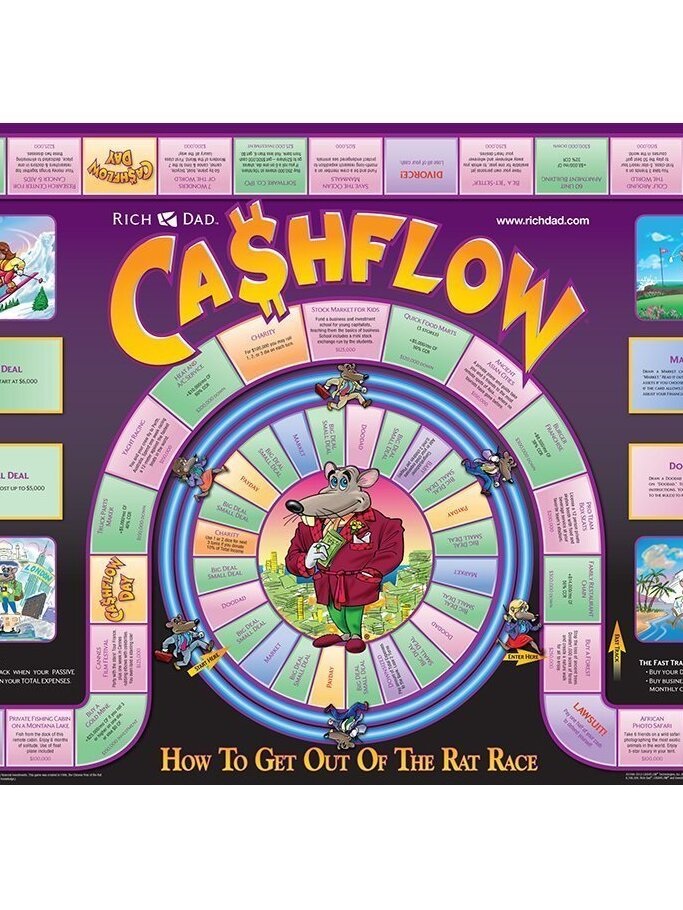
Cashflow for Kids comes from Robert Kiyosaki and the Rich Dad Company, and it is a children's version of the ideas behind his adult Cashflow game. It is a physical board game you play together around a table.
Players move around the board, draw cards and decide what to do with their money. Assets help bring money in, and liabilities, shown by red tokens, take money out, so every choice changes a player's position in a way kids can see. The game rewards players who think ahead about where their money goes, rather than those who simply spend it.
Expect a learning curve the first time. Plan to play the opening game together, with an adult reading the rules and helping each child keep track of their money. After a round or two, most kids pick up the rhythm and start making their own choices.
The money lessons inside
The central idea is cash flow, how money moves into and out of your pocket. From there the game teaches its signature distinction. In Kiyosaki's terms, an asset is something that puts money in your pocket, and a liability is something that takes money out. Accountants use these words differently (they count a car or a house as an asset), so treat this as the game's way of thinking about cash flow rather than the only definition.
The game also introduces the idea of making money work for you, the difference between cash flow and capital gains, and early investing ideas like weighing risk against possible reward. Needs versus wants and choosing between saving and investing come up naturally as players decide how to use limited cash. Remind kids that in real life investments can lose value as well as grow; the game is a safe place to practice, not a promise of results.
These are bigger ideas than most kids' money games tackle, and that is both the appeal and the challenge. Children will understand them far better if a parent connects the game back to real life.
Getting more learning out of game night
After each game, ask players to explain what worked. Good questions: Which card helped you the most and why? Did anything you bought end up costing you money every turn? If you played again, what would you do differently? Hearing a child explain their strategy tells you which ideas have landed.
Bring the vocabulary into daily life. Walk through your home and sort things together. Is a bike an asset or a liability? What about a lemonade stand, a video game subscription or a savings account that earns interest? There are no perfect answers for every item, and the debate is the point.
For older kids, make a real money-in, money-out list. Have them write down their own money in, such as allowance or chore money, and money out, such as snacks or toys, for one month. Then brainstorm a small, parent-supervised project that could bring money in, like helping a neighbor or selling crafts at a family yard sale, and track what it brings in.
Who it's best for
The Rich Dad store recommends Cashflow for Kids for ages 6 and up, and retail listings describe it as for up to six players. Younger children can join in if an adult partners with them, but in our view the ideas about assets and investing click best with kids around eight and up.
It is a great fit for families who want to go beyond counting coins and talk about how money can earn money. It works well for parents willing to sit in for the first few games and keep the conversation going afterward. If you want a quick game young children can play on their own, a simpler money matching or shopping game may suit better.
Related Resources